The Complete Guide to B Vitamins, Why They Matter, and Where to Find Them
If you’ve ever hit that classic afternoon energy crash or felt like your brain was a little foggier than usual, there’s a chance your body might be running low on B vitamins.
B vitamins don’t get the same hype as vitamin D or magnesium, but they quietly do a lot of heavy lifting behind the scenes. They help turn the food you eat into energy, support your nervous system, keep your brain sharp, and help your body handle stress. In other words, they are foundational.
I like to think of B vitamins as cofactors. A cofactor is something your body needs in order for a reaction to happen. Kind of like ingredients in a recipe. You can technically bake cookies without sugar, but they’re not going to taste very good. The same goes for B vitamins. You can eat a perfectly balanced diet, but if you’re missing key cofactors, things just don’t work as smoothly.
Let’s break this down in a simple, real life way.

What Are B Vitamins, Anyway?
B vitamins are not just one vitamin. They’re actually a family of eight different nutrients that work together to keep your body running efficiently.
Think of them like a team. Each one has a specific role, but they work best when they’re all present and doing their thing together.
The B vitamin family includes:
- B1 (Thiamine)
- B2 (Riboflavin)
- B3 (Niacin)
- B5 (Pantothenic Acid)
- B6 (Pyridoxine)
- B7 (Biotin)
- B9 (Folate)
- B12 (Cobalamin)
One important thing all B vitamins have in common is that they’re water-soluble. That means your body doesn’t store them long term the way it stores fat-soluble vitamins like A, D, E, and K. What you don’t use, you excrete. So you need a pretty consistent intake through food, and sometimes supplementation, to keep levels steady.
What Do B Vitamins Do in Your Body?
This is where B vitamins really shine.
Their most important role is energy production.
When you eat a meal, let’s say a chicken sandwich with veggies, your body breaks that food down into carbohydrates, proteins, and fats. Those get further broken down into glucose, amino acids, and fatty acids.
But here’s the key part most people don’t realize.
Your cells cannot use glucose directly for energy.
B vitamins help convert glucose into ATP, which is your body’s actual energy currency. ATP is what your cells run on. Without enough B vitamins, that conversion process slows down.
So you might be eating enough food. You might even be eating “healthy.” But your body struggles to unlock the energy from that food.
That’s why persistent fatigue is often one of the earliest signs of low B vitamin status.
It’s like having a car with a full tank of gas, but the engine won’t turn over.

Beyond energy, B vitamins play major roles in:
- Making red blood cells that carry oxygen throughout your body
- Supporting brain function and cognitive clarity
- Maintaining a healthy nervous system
- Supporting DNA synthesis and repair
- Producing neurotransmitters like serotonin and dopamine
This is why B vitamin deficiencies can show up as brain fog, low mood, irritability, anxiety, tingling in the hands or feet, or even poor stress tolerance.
And yes, biotin (B7) really does support healthy hair, skin, and nails. That’s not just marketing.
For anyone pregnant or trying to conceive, folate (B9) is critical for proper nervous system development in a growing baby. And B12 is essential for nerve health and preventing certain types of anemia that leave people feeling weak and depleted.
Why So Many People Are Low in B Vitamins
Even if your diet looks decent on paper, modern life makes it surprisingly easy to burn through B vitamins faster than we replace them.
Here’s what I see most often in practice.
Chronic Stress
Stress is a huge B vitamin drain.
When you’re under ongoing physical or emotional stress, your body uses more B vitamins, especially B5, which supports adrenal function. If you’re constantly stressed and not replenishing, it’s like spending from your savings account without ever making deposits.

Alcohol Intake
Alcohol interferes with the absorption and activation of several B vitamins, especially B1, B9, and B12. Regular drinking, even if it’s moderate, can slowly chip away at your levels.
Certain Medications
Some very common medications can impact B vitamin status:
- Metformin can lower B12
- Birth control pills may reduce B6 and folate
- Acid-reducing medications can impair B12 absorption since stomach acid is needed to release B12 from food
Poor Gut Health
This is a big one.
Your digestive system is where B vitamin absorption happens. Conditions like celiac disease, Crohn’s, IBS, chronic reflux, or even increased gut permeability can interfere with absorption.
I see many people dealing with bloating, constipation, diarrhea, heartburn, or food sensitivities who are eating nutrient-dense foods but not absorbing them well.
Those symptoms are clues. Your body is asking for support.

Aging
As we get older, stomach acid production naturally declines. This makes it harder to absorb B12 from food, which is why B12 deficiency is more common as we age.
Food Sources Rich in B Vitamins
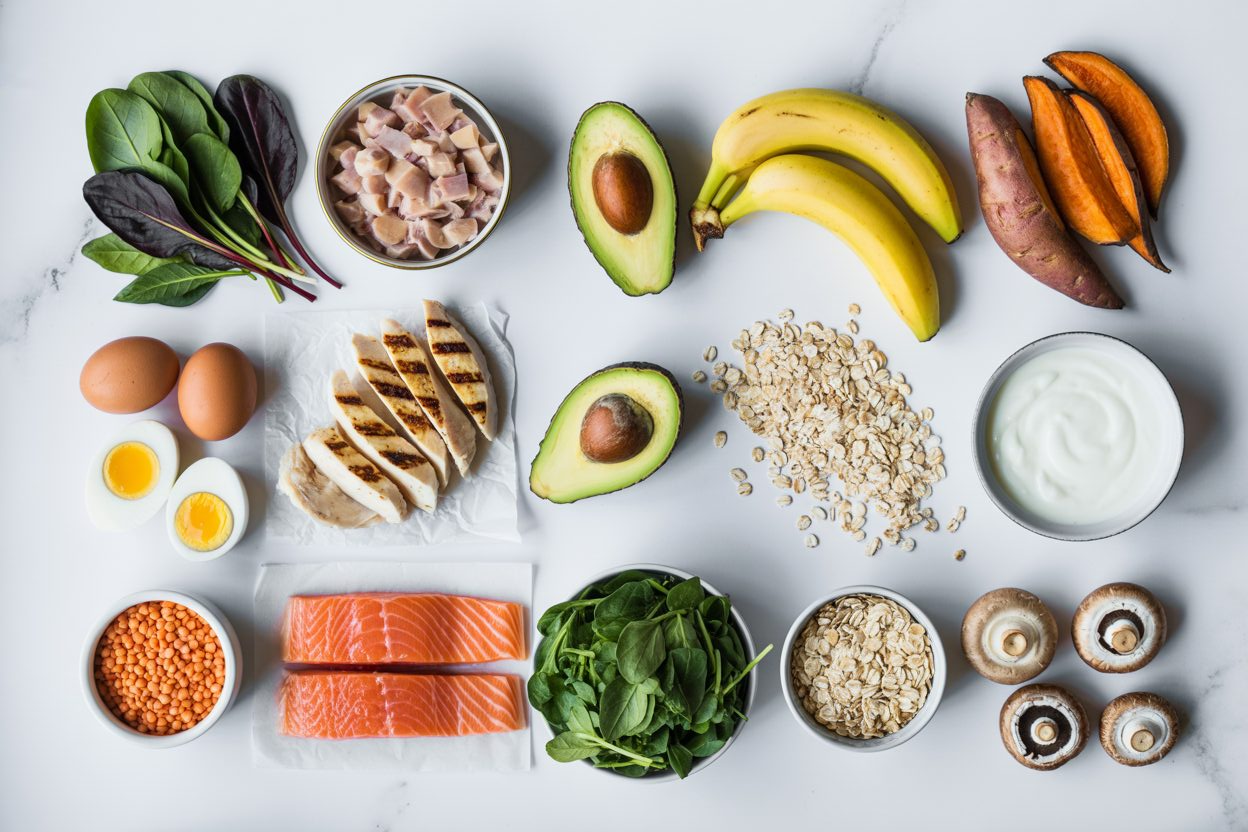
Here’s the good news. B vitamins are abundant in real food, and many foods contain multiple B vitamins at once.
B1 (Thiamine)
Found in whole grains like oats, brown rice, and whole wheat bread. Pork is one of the richest sources. You’ll also find it in sunflower seeds, lentils, and black beans.
B2 (Riboflavin)
Rich in dairy products like milk, yogurt, and cheese. Also found in eggs, lean meats, almonds, spinach, and mushrooms.
B3 (Niacin)
Abundant in chicken, turkey, tuna, and salmon. You’ll also get it from peanuts, legumes, and whole grains.
B5 (Pantothenic Acid)
Found in almost all foods, but especially in chicken, beef, potatoes, oats, tomatoes, avocados, and broccoli.
B6 (Pyridoxine)
Found in chickpeas, salmon, chicken, potatoes with the skin, and bananas.
B7 (Biotin)
Present in egg yolks, almonds, sweet potatoes, spinach, and salmon. Your gut bacteria also produce some biotin, which is another reason gut health matters.
B9 (Folate)
Found in leafy greens like spinach, kale, and romaine. Also in asparagus, Brussels sprouts, lentils, beans, and citrus fruits.
B12 (Cobalamin)
Found almost exclusively in animal products like meat, fish, eggs, and dairy. Salmon, beef, tuna, and yogurt are excellent sources.

If you eat a plant-based diet, this is where fortified foods or supplementation become important. Fortified plant milks, nutritional yeast, or a high-quality B12 supplement can help bridge that gap.
What About Supplements?
Food always comes first. But there are times when supplementation can be helpful.
People who may benefit from supplements include:
- Those under high stress
- Anyone with digestive issues
- Vegans and vegetarians
- Older adults
- People on medications that impact absorption
A high quality B-complex supplement can be a helpful tool when used appropriately. I always look for activated forms like methylated B12 and folate, especially for people with absorption challenges.
This is one area where quality matters, so working with a practitioner who understands your full picture is key.
Bringing It All Together
B vitamins work best as a team. You don’t need to obsess over hitting each one perfectly every day.
A varied diet that includes whole grains, quality protein, plenty of vegetables, some fruit, and healthy fats will cover most bases for many people.
But if you’re dealing with fatigue that doesn’t improve with rest, brain fog, mood changes, digestive issues, or chronic stress, it’s worth taking a closer look. Sometimes it’s not about eating more, it’s about absorbing and utilizing what you already eat.
Need Support?
If you’re constantly tired, dealing with gut issues, or feel like your body just isn’t responding the way it should, this is exactly the kind of thing I help clients sort through.
Together, we look at food, digestion, stress, lifestyle, and targeted supplementation to support your body at the root level.
👉 If you’re ready to stop guessing and start feeling better, I’d love to work with you.
Learn more about 1:1 nutrition support and how we can build a plan that actually works for your body.
Your energy, focus, and health are worth it.
Frequently Asked Questions About B Vitamins
What are the benefits of B vitamins?
B vitamins help your body turn food into energy, support brain and nervous system function, aid red blood cell production, and help regulate mood and stress. They also play a role in metabolism, hormone production, and DNA repair. When B vitamin intake is low, people often notice fatigue, brain fog, low mood, or poor stress tolerance.
What are the signs of low B vitamins?
Common signs of low B vitamin levels include low energy, brain fog, irritability, anxiety, tingling or numbness in the hands and feet, poor concentration, and weakness. Symptoms vary depending on which B vitamin is low and how long levels have been depleted.
Which foods are highest in B vitamins?
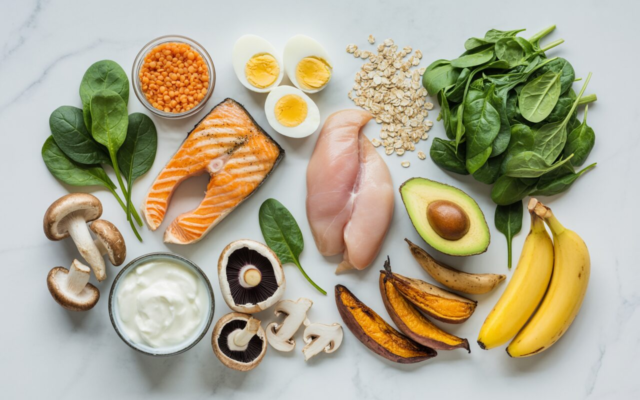
Foods high in B vitamins include animal proteins like salmon, chicken, eggs, beef, and yogurt, as well as plant foods such as lentils, beans, leafy greens, whole grains, nuts, and seeds. Many foods contain more than one B vitamin, so variety matters.
Can you get enough B vitamins from food alone?
Many people can meet their B vitamin needs through food, especially when eating a balanced diet with adequate protein, whole grains, and vegetables. People with digestive issues, high stress, certain medical conditions, or restrictive diets may need additional support.
Do vegetarians and vegans need to supplement with B vitamins?
Vegetarians and vegans are at higher risk for low vitamin B12 since it is found primarily in animal products. Fortified foods like plant milks and nutritional yeast can help, but supplementation is often needed to maintain adequate levels.
How do B vitamins affect energy and metabolism?
B vitamins are required to convert carbohydrates, fats, and proteins into usable cellular energy. Without enough B vitamins, your body may struggle to produce ATP efficiently, which can lead to fatigue even when calorie intake is adequate.
Can stress deplete B vitamins?
Chronic stress increases the body’s demand for B vitamins, especially B5, B6, and B12. Stress can also negatively affect digestion and absorption, further increasing the risk of deficiency.
Are B vitamin supplements safe to take daily?
Because B vitamins are water-soluble, excess amounts are typically excreted. Most people tolerate B vitamin supplements well when taken at appropriate doses, but quality and individual needs matter.
What is the difference between folate and folic acid?
Folate is the natural form of vitamin B9 found in foods, while folic acid is the synthetic form used in supplements and fortified foods. Some people have difficulty converting folic acid into its active form, which is why food-based folate or methylated forms are often preferred.
Can gut health affect B vitamin absorption?
Yes. B vitamins are absorbed in the digestive tract, so gut issues like IBS, celiac disease, inflammation, or low stomach acid can impair absorption even with a nutrient-dense diet.
Should I test my B vitamin levels?
Testing may be helpful if you experience ongoing fatigue, neurological symptoms, digestive issues, or follow a restrictive diet. A healthcare provider can help determine whether testing or supplementation is appropriate.
This post contains affiliate links, which means I may earn a small commission if you make a purchase through these links—at no extra cost to you. Thank you for supporting my work!.