Simple, whole-food options to help balance hormones, boost energy, and support emotional well-being…backed by science and easy to add to your routine.
Quick Table of Contents
- Why Food Even Matters for Mood + Hormones
- The Fab 10 (with “RD-approved” ways to use them)
- Your 1-Day Sample Menu (to prove it’s doable)
- Wrap-Up & What to Do Next
When your mood is all over the place or your hormones feel like they’re running the show, food might not be the first thing you think to adjust, but it should be. What you eat plays a powerful role in how you feel, think, sleep, and even how smoothly your cycle runs. The good news? You don’t need a complicated plan. Just a few strategic foods can help support your mood, balance your hormones, and give your body the steady fuel it needs to feel more like you again.
This post contains affiliate links, which means I may earn a small commission if you make a purchase through these links, at no extra cost to you. Thank you for supporting my work!

1. Why Food Matters for Mood + Hormones
Our hormones (think cortisol, insulin, estrogen, progesterone, thyroid) just to name a few) have a huge impact on our mood, brain and nervous system, sending constant communication messages flying, impacting our feelings, hunger cues and even sleep patterned, Hormones run the behind-the-scenes show for energy, stress, cycles, and really impact how we are feeling and (no suprise) when we eat has a huge impact on our hormones.
How Food impacts our hormones (and our mood)
- Micronutrients (like vitamins, minerals, and antioxidants) are the raw materials your body needs to make and balance hormones. Without them, your hormones can’t do their jobs properly, kind of like trying to bake a cake without flour or eggs.
- Healthy fats are essential for hormone production and cell membrane function.
- Protein and specific amino acids are the raw materials your body uses to make mood-supportive neurotransmitters.
- Fiber and probiotics support your gut microbiome, which plays a major role in estrogen metabolism and produces a surprising amount of serotonin, the “feel-good” chemical.
In other words, the right foods can help calm stress, support mood stability, ease PMS or perimenopause symptoms, and keep your energy more steady throughout the day.
The Fab 10: Foods That Support Mood and Hormones Naturally
These are the top ten foods I regularly recommend to clients who are struggling with mood swings, fatigue, anxious thoughts, or hormonal imbalances.
Pro Tip: You don’t have to eat all of these daily. Just start rotating a few of them into your week and aim for variety over perfection.
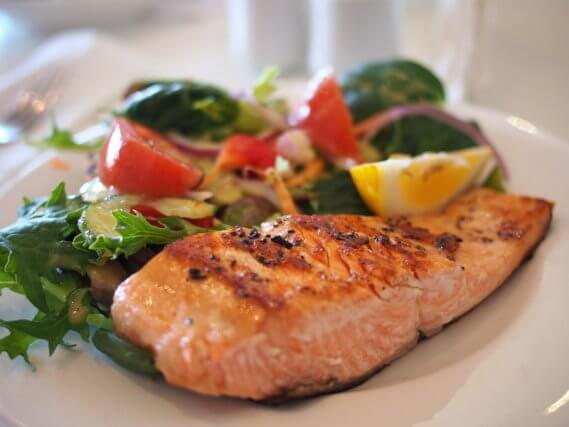
1. Wild-Caught Salmon
Key nutrients: Omega-3s (EPA & DHA), vitamin D, selenium, B-vitamins
Why it helps: Omega-3s support brain health, reduce inflammation, and improve the flexibility of cell membranes, which is important for hormone receptors to function properly. And Vitamin D plays a key role in serotonin production and helps regulate the immune system.
How to use it:
- Try a sheet-pan miso-ginger salmon with broccoli (quick + easy).
- Aim for 2 servings per week (3–4 oz cooked).
- Canned salmon is a great budget-friendly option—perfect for salmon salad or wraps.
- Salmon Cobb Salad, Salmon with Sage and Red Onion, Lemon and Dill Salmon,
2. Greek Yogurt or Kefir
Key nutrients: Probiotics, protein, calcium
Why it helps: A healthy gut supports hormone balance by aiding in estrogen metabolism and producing calming neurotransmitters like GABA. Yogurt and kefir also provide protein to help stabilize blood sugar, which is key for mood and energy.
How to use it:
- Make a breakfast parfait with berries and pumpkin seeds.
- Add ½ cup kefir to smoothies for a probiotic boost.
- Dairy-free? Look for unsweetened coconut yogurt with live active cultures.
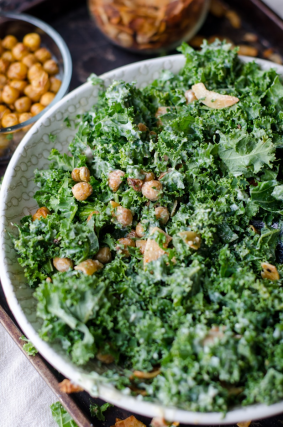
3. Leafy Greens (Spinach, Kale, Swiss Chard)
Key nutrients: Folate, magnesium, vitamin K, antioxidants
Why it helps: Folate is needed for neurotransmitter production, and magnesium supports relaxation and nervous system regulation. Leafy greens are also anti-inflammatory and help support detoxification pathways that are important for hormone balance.
How to use it:
- Toss a handful into your smoothie (you won’t taste it).
- Sauté with olive oil and garlic, or add to scrambled eggs.
- Massage kale with lemon and olive oil for a satisfying salad base.
4. Eggs (Including the Yolks)
Key nutrients: Choline, B12, vitamin D, high-quality protein
Why it helps: Choline is essential for brain health, hormone metabolism, and nervous system function. Eating the yolk provides fat-soluble vitamins that support hormonal balance and energy.
How to use it:
- Hard-boil a batch for snacks or breakfast.
- Make a simple veggie frittata or try shakshuka for dinner.
- Plant-based? Focus on soy lecithin or sunflower seeds for a choline alternative.
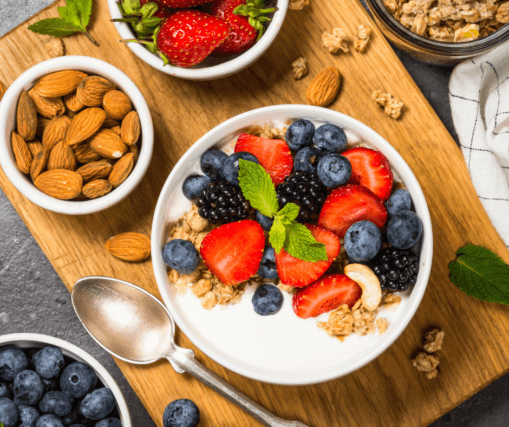
5. Berries (Blueberries, Raspberries, Strawberries)
Key nutrients: Vitamin C, antioxidants, fiber
Why it helps: Antioxidants in berries protect brain cells from oxidative stress and support cognitive and emotional health. Their fiber content also supports gut health and balanced blood sugar, which helps reduce mood swings.
How to use it:
- Keep frozen berries on hand for smoothies.
- Add to yogurt, oatmeal, or chia pudding.
- Use as a colorful topping for salads or pancakes.
6. Pumpkin Seeds (Pepitas)
Key nutrients: Magnesium, zinc, iron, tryptophan
Why it helps: These minerals support hormone production, thyroid health, and neurotransmitter synthesis. Tryptophan is a precursor to serotonin and melatonin, supporting both mood and sleep.
How to use it:
- Add to trail mix with dark chocolate chips and dried cherries.
- Sprinkle on salads, oatmeal, or roasted veggies.
- Blend into homemade energy bites.
7. Dark Chocolate (70%+ cacao)
Key nutrients: Magnesium, iron, flavonoids, theobromine
Why it helps: Flavonoids support brain function and reduce stress. Magnesium helps relax the nervous system, and theobromine gives a mild mood boost without the crash of caffeine.
How to use it:
- Enjoy 1–1.5 oz per day—pair with berries or nuts for a satisfying snack.
- Break into yogurt or melt into oats.
- Choose minimally processed dark chocolate with few added ingredients.
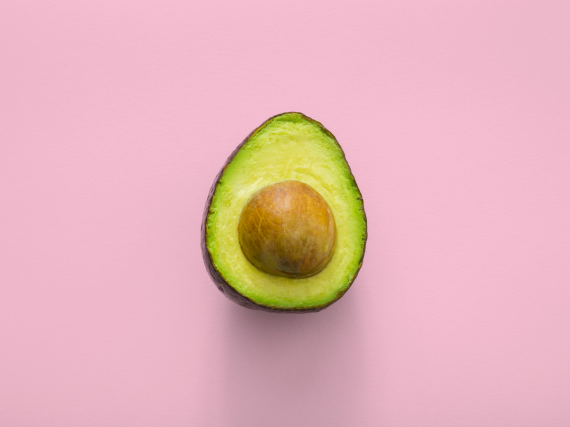
8. Avocado
Key nutrients: Monounsaturated fats, fiber, potassium, vitamin E
Why it helps: Healthy fats support the production of sex hormones like estrogen and progesterone. Avocados also support stable blood sugar and help reduce water retention thanks to their potassium content.
How to use it:
- Spread on gluten-free toast with chili flakes and hemp seeds.
- Add to smoothies for a creamy texture.
- Use as a salad base or blend into a creamy dressing.
9. Lentils & Chickpeas
Key nutrients: Plant protein, fiber, folate, iron, B6
Why it helps: These legumes support steady blood sugar and provide B6, a vitamin involved in the production of neurotransmitters and estrogen metabolism. Their fiber content helps support healthy digestion and hormone detoxification.
How to use it:
- Make a batch of lentil soup for easy lunches.
- Roast chickpeas with olive oil and spices for snacks.
- Mix into salads, grain bowls, or tacos.
10. Brazil Nuts
Key nutrients: Selenium, healthy fats, magnesium
Why it helps: Just one or two Brazil nuts a day provide all the selenium your thyroid needs to function properly. Selenium also supports antioxidant activity in the brain and helps regulate inflammation.
How to use it:
- Eat 1–2 per day as a snack—more isn’t better here.
- Add to trail mix or crumble over yogurt.
- Keep a small jar handy at your desk or in your pantry.
A Sample Day of Mood & Hormone-Supportive Eating
Breakfast:
Blueberry-spinach smoothie with kefir, avocado, vanilla protein, and flaxseeds
Snack:
Hard-boiled egg + 2 Brazil nuts + green tea
Lunch:
Salmon + massaged kale salad with avocado, pumpkin seeds, and lemon-olive oil dressing
Snack:
Trail mix with pepitas, dark chocolate, and dried cherries
Dinner:
Lentil coconut curry over quinoa with fresh cilantro and a dollop of Greek yogurt
Evening option:
Warm golden milk (almond milk, turmeric, cinnamon) for a calming bedtime ritual
Final Thoughts & Action Steps
When it comes to balancing your hormones and supporting your mood, food is a powerful tool. These 10 foods aren’t magic, but they work with your body—not against it—to help you feel more grounded, energized, and emotionally resilient.
Try This:
- Pick 2–3 foods from the list to add this week—start small.
- Batch prep something easy like salmon, lentils, or hard-boiled eggs.
- Notice how you feel. Track energy, mood, and sleep as you make changes.
- Look at the bigger picture. Nutrition matters, but so do sleep, stress, movement, and connection. It’s all connected.
You don’t have to overhaul your entire diet to feel better. Just start making meals that give your body what it needs—and notice how much more supported you feel in return.