Skip to content
Why Bloating, Fatigue, Skin Issues, Hormonal Imbalance, and Stubborn Weight Gain Might All Be a Gut Health Problem. And What to Do About It!
I had a great-granny we called Nana Utley. She was a spitfire of a woman, born in the 1800s, hardworking, and loved her family fiercely! I had the pleasure of meeting her a few times when I was young.
My dad tells this story about his grandmother always being obsessed with everyone’s daily BM (bowel movement_, she would ask about it constantly. My dad hated it! “Jimmy, have you had a BM today?” He found it mortifying. But she just loved him and wanted him to be well.
When I first started my practice as a Registered Dietitian, I thought I was going to spend most of my days talking about calories and macronutrients like protein and carbohydrates. And sure, we talk about those things. But you know what I actually spend a lot more time talking about?
Poop.
Yes, poop. Frequency, color, shape, consistency. My clients walk in expecting to talk about what they ate for breakfast, and we talk about that some, but we also talk A LOT about poop. And a lot of times, what they tell me isn’t great. They are not having a BM daily (Nana wouldn’t be happy!), or maybe they are having loose BMs multiple times a day, or things are really burn-y, or they have a lot of gas and frequency without much actual output. And until someone asked them about it, they thought it was normal — “Oh, this is just the way I am.”
Because here’s what I’ve learned after years of clinical practice: if you want to understand someone’s health, their weight, their energy, their skin, their mood, their hormones, you have to start in the gut. Every single time.
let me tell you what we are actually looking for, because most people genuinely don’t know what “normal” is, and that blows my mind a little.
Normal is pooping at least once a day. Every day. It should be easy to pass, well-formed, and not require a 20-minute commitment! You should not be straining, you should not be sprinting to the bathroom, and it should not feel like a dramatic event in either direction.
If you are going every two or three days and think that’s just “the way you are” ( I hear that a lot actually) that is actually not normal, that is constipation. And on the flip side, if you are going multiple times a day with loose or urgent stools, that is not normal either, even if it has been your reality for years.
Color matters too. You are looking for a medium brown. Not green, not yellow, not pencil-thin, not floating every single time, and definitely not accompanied by pain or blood (if that’s happening, please call your doctor).
The bottom line (pun absolutely intended) is that your daily BM is one of the clearest signals your body gives you about what is happening on the inside.
So it looks like Nana Utley was onto something that modern medicine is just now catching up to: your poop and gut health are a window into your overall health.
I wanted to write an in-depth article about what is really going on with your gut and what you can do about it! This article is broken into three parts, The Problem, The Cause, and The Cure, so you have everything you need in one place.
Let’s dive in.

Part 1: Why Your Gut Health Matters More Than You Think
Your GI Tract Is Not Just a Digestive Tube
Most people think of the gastrointestinal tract as a fairly simple system: food goes in, nutrients get absorbed, waste comes out. But what’s actually happening inside your gut is one of the most complex and sophisticated biological ecosystems on the planet.
Your GI tract is home to trillions of microorganisms, bacteria, viruses (called bacteriophages), fungi, and yeast, collectively known as your gut microbiota. And these tiny organisms are doing an enormous amount of work on your behalf:
- Digesting food and extracting nutrients you couldn’t access on your own
- Producing vitamins like B12, K2, and short-chain fatty acids (more on those in a moment)
- Synthesizing neurotransmitters, including a significant portion of your body’s serotonin
- Regulating immune function roughly 70% of your immune system lives in your gut
- Maintaining the structural integrity of the intestinal lining
- Communicating directly with your brain via the vagus nerve
That last point is worth pausing on.
The Gut-Brain Axis: Your Second Brain
The gut is often called the “second brain,” and that’s not just a catchy metaphor. Your GI tract contains over 500 million neurons and is directly connected to your brain via the vagus nerve, a long, wandering nerve that serves as a two-way communication highway between your brain and your gut.
This bidirectional relationship, known as the gut-brain axis, means that dysfunction in your gut doesn’t just stay in your gut. Messages travel both directions. A distressed gut sends distress signals to the brain, and a stressed brain sends distress signals to the gut. This is why anxiety can give you stomach cramps, and a disrupted microbiome can contribute to depression.
In my clinical practice, I see this play out constantly. Clients come in frustrated about their mental health, feelings of overwhelm or their inability to manage stress, and when we dig into their gut health, there’s almost always something going on there too.

What Happens When the Balance Gets Disrupted: Dysbiosis
In a healthy gut, beneficial bacteria are abundant and diverse, keeping the less helpful organisms in check. But our modern environment, processed food, chronic stress, medication use, and environmental toxins make it remarkably easy to throw this balance off.
When that balance tips, we call it dysbiosis. And dysbiosis sets off a cascade of problems that reaches far beyond your digestive system.
Part 2: The Downstream Effects of Dysbiosis
Leaky Gut and Chronic Inflammation
Your intestinal lining is made up of cells packed tightly together, forming a selective barrier. On one side: the contents of your gut (including bacteria and food particles). On the other side: your bloodstream and immune system.
When gut bacteria become imbalanced, they stop maintaining the integrity of this barrier. The tight junctions between cells begin to loosen, a condition commonly called intestinal permeability, or “leaky gut.” Food proteins like gluten can then pass through the barrier and into the bloodstream, where your immune system tags them as foreign invaders and mounts an immune response.
The result? Chronic, low-grade inflammation.
And here’s where it gets important: chronic inflammation isn’t just uncomfortable. Research increasingly points to it as the underlying driver of many of our most common chronic diseases.
The Short-Chain Fatty Acid Connection
When your beneficial gut bacteria are fed the right foods — specifically fiber — they produce short-chain fatty acids (SCFAs) like butyrate, propionate, and acetate. These aren’t just byproducts; they’re critical compounds that:
- Fuel the cells lining your colon (colonocytes run almost exclusively on butyrate)
- Reduce intestinal inflammation and help maintain the gut barrier.
- Signal to your immune system to stay calibrated and non-reactive
- Influence blood sugar regulation and insulin sensitivity.
When fiber is lacking, as it is in the typical Western diet, SCFA production drops. The gut lining weakens. Inflammation rises. And the downstream effects begin.

Chronic Conditions Linked to Gut Imbalance
In my clinical practice, I’ve learned to look at gut health first when clients come in struggling with any of the following, because the research linking these conditions to gut dysbiosis is compelling:
Obesity and Metabolic Dysfunction Certain bacterial strains directly influence hunger hormones like ghrelin, altering fullness and hunger cues. Some bacteria increase cravings for sugar, their preferred food source. The inflammation associated with dysbiosis also elevates cortisol, which triggers glucose release from the liver, increases insulin, and, over time, can lead to insulin resistance and weight gain.
Type 2 Diabetes: A 2019 study demonstrated that an imbalance in gut bacterial composition may contribute to type 2 diabetes development. Certain bacterial strains, more common in people eating a Westernized diet, increase glucose intolerance, driving insulin dysregulation that eventually leads to type 2 diabetes.
Cardiovascular Disease: The gut microbiome interacts with immune function and influences inflammatory and metabolic pathways throughout the body. Atherosclerosis — the buildup of plaque in arteries — is increasingly understood as an interplay between blood lipids and inflammation, both of which are influenced by gut health.
Skin Conditions: Eczema, Acne, Psoriasis, and More
The skin is a barometer for systemic inflammation. And in my clinical practice, I have watched clients come in frustrated after years of trying every cream, every medication, every skincare product on the market and nobody ever once suggested that the answer might be coming from the inside.
Here is what is happening. Your skin is your largest organ, and it is in constant communication with your gut through what researchers call the gut-skin axis. When your gut is inflamed, when dysbiosis is present, and the intestinal barrier is compromised, inflammatory signals travel through the bloodstream and show up on your skin. For some people that looks like eczema. For others, it is acne, psoriasis, rosacea, or just chronically dull, reactive, unhappy skin that never quite looks or feels right, no matter what you put on it.
Eczema in particular, has a very well-documented connection to gut health. Research has shown that people with eczema tend to have significantly less microbial diversity in their gut, and that disruption to the microbiome, especially early in life, which goes back to everything we talked about with antibiotics, is a major contributing factor in who develops it and how severely.
Acne is another big one, and this one surprises people. We have been taught to think of acne as a skin problem, a clogged pore problem, a hygiene problem, a hormone problem. And yes, hormones play a role. But remember what we just talked about with the estrobolome and how gut health directly influences hormone metabolism? When estrogen and other hormones are not being processed and eliminated efficiently because of gut dysbiosis, that hormonal imbalance shows up on your skin.
Psoriasis and rosacea also have emerging research linking them to gut microbiome disruption and intestinal permeability. The common thread across all of these conditions is inflammation and inflammation, as we keep coming back to, starts in the gut.
I always tell my clients with chronic skin conditions: we absolutely address what you are putting on your skin, but we have to address what is happening on the inside first. The skin is just showing you what the gut is trying to tell you. And when we start healing the gut, the skin very often follows.

Neurological Diseases and Mental Health
We have been taught to think of brain and mental health conditions as problems that originate in the brain. Depression is a serotonin problem. Anxiety is a stress response problem. Alzheimer’s is a brain disease. And while that is not entirely wrong, it is profoundly incomplete. Because the research on the gut-brain axis has expanded dramatically in recent years, and what it is showing us is that the gut is deeply involved in all of it.
Here is the mechanism in plain English. Remember that roughly 90% of your body’s serotonin is produced in the gut, not the brain. Your gut bacteria are also directly involved in producing other neurotransmitters like dopamine and GABA, which regulate mood, motivation, focus, and anxiety. When dysbiosis is present, that neurotransmitter production gets disrupted. At the same time, the inflammation associated with a compromised gut barrier sends inflammatory signals through the vagus nerve directly to the brain, where they contribute to what researchers call neuroinflammation. And neuroinflammation is showing up in the research as a significant factor in depression, anxiety, cognitive decline, and neurodegenerative diseases like Parkinson’s and Alzheimer’s.
Studies have also found meaningful differences in the gut microbiome composition of people with ADHD and autism compared to neurotypical individuals. The research is still evolving and I want to be careful not to overstate it, but the connection is real, it is documented, and it is being taken seriously by researchers in a way it simply was not a decade ago.
What I find most striking about all of this is how many of my clients come in on antidepressants or anxiety medication, and nobody has ever once asked them about their gut. Not once. And when we start addressing the gut, their mental health symptoms often start to shift in ways that genuinely move them.
The brain and the gut are not separate systems. They are in constant conversation. And it is becoming increasingly clear that if you want a healthy mind, you have to start by taking care of what is happening in your gut.
Hormonal Imbalance
This one is big, and it is one that most women have never heard explained this way, so stay with me.
Your gut bacteria play a direct role in how your body metabolizes and eliminates estrogen. There is actually a specific collection of gut bacteria called the estrobolome whose whole job is to help regulate estrogen levels in the body. When your microbiome is healthy and balanced, the estrobolome helps your body process and eliminate excess estrogen efficiently. When it’s not, when dysbiosis is present, that process breaks down.
What happens then? Estrogen that should be eliminated gets reabsorbed back into the bloodstream, leading to what we call estrogen dominance. And estrogen dominance has a very recognizable symptom list: painful or heavy periods, PMS that feels out of control, bloating, mood swings, weight gain around the hips and belly, fibroids, endometriosis, and even increased breast cancer risk over time.
In my clinical practice, I see this constantly in women who have been told their hormones are “a little off” but nobody ever connected it back to their gut. And when we start working on gut health, their hormonal symptoms often start to shift too.
So if you have been struggling with hormonal issues and feel like you have tried everything, it may be worth asking what your gut has to do with it. Spoiler: probably a lot.
Sleep Disruption
Ok, this one is going to hit home for a lot of you, because most people I talk to feel like they aren’t truly getting great sleep on a consistent basis.
Here is something most people don’t know: your gut and your sleep are in a constant conversation with each other. Remember how I mentioned that a significant portion of your body’s serotonin is produced in the gut? Well, serotonin is also the precursor to melatonin, the hormone that regulates your sleep-wake cycle. So when your gut is out of balance and serotonin production is disrupted, your melatonin can take a hit too. Which means your sleep takes a hit.
But here is the part that really gets me, it goes both ways. Poor gut health disrupts your sleep, AND poor sleep disrupts your gut health. When you are not sleeping well, your gut bacteria actually shift in composition. Diversity drops. Inflammation rises. And then that gut disruption makes your sleep worse. And around and around it goes.
I see this cycle play out in my clients all the time. They come in exhausted, they’ve tried melatonin, they’ve tried everything, and nobody has ever once asked them about their gut.
So if you are lying awake at 2am reading this (hi, I see you), this might be one more piece of the puzzle worth paying attention to.
It is all connected. And that is exactly what we are going to dig into next: what is actually causing all of this disruption in the first place.
Part 3: What’s Causing the Problem?
The Most Common Culprits Behind Dysbiosis
There’s no single cause of gut dysbiosis; it’s usually a combination of factors that accumulate over time, often starting in childhood. Here are the ones I see most frequently in clinical practice, and importantly, the ones we have the most control over.
Antibiotic Use
Antibiotics are genuinely one of the great medical marvels of the modern era. They’ve saved countless lives and dramatically reduced mortality from infections that used to be death sentences. (You know a tooth infection killed King Tut, right? That’s what antibiotics protect us from.)
I am so grateful for antibiotics. When my son was an infant, he was sick constantly, round after round of infections, constantly on antibiotics. And I would make the same choice again. Those medications kept him safe.
But antibiotics don’t discriminate. They kill harmful bacteria and beneficial bacteria, which is why frequent antibiotic use, especially in early childhood, when the microbiome is still developing, can have lasting effects on gut health. My son had frequent diarrhea and even some tooth enamel discoloration, both of which can be signs of microbiome disruption. Had I known then what I know now, I would have been far more proactive about protecting his gut through and after each course of treatment.
It’s also worth noting that antibiotics show up in places beyond the doctor’s office; they’re routinely given to livestock to accelerate growth (fascinating and slightly alarming), used in commercial fisheries, and found in some antibacterial soaps and personal care products. All of these sources contribute to microbiome disruption.
Common Medications
Some of the most widely prescribed medications have well-documented effects on gut bacteria. In my clinical practice, I pay close attention when clients are taking any of the following:
- Oral contraceptives – often used for years or decades. Here is the deal, I am fan with a capital F of the access and use of birth control, it allows women to have choices, autonomy, and you should take it if that’s best for you! If you do, amazing, I love that for you. I just want you to know that is can affect your gut microbiome, so just take steps to support your gut health.
- Laxatives – frequently prescribed for constipation (itself often a symptom of dysbiosis)
- Metformin and other diabetes medications – used to control blood sugar
- Proton pump inhibitors (PPIs) – taken for heartburn and acid reflux. (people are often on these for YEARS)
- NSAIDs – ibuprofen, naproxen, and similar pain relievers
- SSRIs – prescribed for depression and, increasingly, as a first-line IBS treatment
Here’s what strikes me about this list: many of these conditions, heartburn, constipation, depression, blood sugar dysregulation have strong gut health connections. The medication treats the symptom. But the root cause may still be there, quietly progressing.
I’m not suggesting you stop your medications. What I am suggesting is that addressing the underlying gut imbalance may, over time, and possibly reduce your need for some of them (with your providers support of course.

Environmental Toxins
Herbicides like glyphosat the active ingredient in Roundup, are sprayed in massive quantities on conventionally grown grains and produce. The crops are genetically modified to survive the herbicide. We are not.
Glyphosate residue clings to food through harvest and processing, runs off farmland into our drinking water, and has been shown to be toxic to beneficial gut bacteria. But here’s the thin it’s not just a gut health issue anymore. This has become a major legal and public health story, and I think you deserve to know about it.
Jury after jury across the country has been finding Monsanto liable for cancer. In 2025 alone, a Georgia jury awarded over $2 billion to a man who developed non-Hodgkin’s lymphoma after years of Roundup exposure, with jurors finding that Monsanto knowingly concealed the cancer risks and failed to warn consumers. Roundup cancer attorneys have obtained for roughly $6 billion in combined jury verdicts in 2024 and 2025. And perhaps most damning of all, in December 2025, the journal Regulatory Toxicology and Pharmacology retracted the seminal study from 2000 that had served as the primary scientific defense for glyphosate’s safety for 25 years.
The science that said this stuff was fine? Officially discredited.
Now, I am not here to be alarmist, and I am not saying you need to throw out everything in your pantry today. But I do think this is information you deserve to have. This chemical is in our food supply, in our water, and in our bodies and the evidence that it causes harm is no longer fringe. It is billion-dollar courtroom verdicts and retracted studies.
Ok, this begs the question if the evidence is this damning, if juries are awarding billions of dollars in damages, if the key study defending its safety just got retracted after 25 years, why is glyphosate still legal and still showing up in our food supply?
Great question. And honestly, a really frustrating one.
The short answer is money and politics, which I know is not the answer any of us want. Bayer and Monsanto have spent enormous amounts lobbying to protect their product, and our regulatory agencies have been slow to act. Meanwhile, other countries have looked at the same evidence and made very different decisions. The European Union has had ongoing battles over glyphosate approval, with many member countries pushing hard to ban it outright due to its links to cancer. Several countries have already restricted or banned it entirely. But here in the US? It is still being sprayed on the food you are feeding your family.
This is one of those moments when I believe we need our government to step up and do its job, prioritizing the health of its people over the profits of a corporation. Until that happens, we are largely on our own, making the best choices we can with the information we have.
And that is exactly why I talk about this stuff. Because you deserve to know.
So what can you do? Buy organic where you can, especially for the foods on EWG’s Dirty Dozen list. Wash all your produce thoroughly before eating it. And if you have Roundup sitting in your garage, it might be time to find an alternative. Google “natural weed killer” and you will have more options than you know what to do with.
This is one of those areas where small, consistent choices genuinely add up for your gut, and now it seems, for a whole lot more than that.
The Western Diet and the Standard American Diet (SAD)
The standard American diet, and yes the acronym is very fitting, is arguably the single biggest driver of gut dysbiosis at a population level. You know the drill: highly processed, low in fiber, low in nutrients, low in plant diversity, loaded with refined carbohydrates, added sugars, and a long list of ingredients you need a chemistry degree to pronounce. And while we already talked about pesticides and environmental toxins, the food itself is doing plenty of damage all on its own.
Let me break down exactly why.
The Fiber Problem
Fiber is the primary food source for your beneficial gut bacteria. When fiber is absent, those bacteria don’t just go quiet; they starve. And when they starve long enough, some strains actually begin consuming the mucus lining of the gut wall itself, further compromising the intestinal barrier. Meanwhile, the bacteria that thrive on sugar and refined carbohydrates proliferate and take over, shifting the balance further toward dysbiosis. It is essentially a hostile takeover of your gut ecosystem, and the standard American diet sets the stage for it every single day.
The average American gets about half the fiber they need daily . Half. And most of that is coming from low quality sources rather than the diverse, plant-rich sources your gut bacteria actually want.
The Added Sugar Problem
Sugar is the preferred food source for the less helpful bacteria and yeast in your gut, like Candida. The more sugar you eat, the more you feed and grow those populations, making it harder and harder to rebalance your microbiome. And we are not just talking about obvious sugar like candy and soda. Added sugar hides in everything, condiments, bread, pasta sauce, flavored yogurt, granola bars, things we think of as healthy. The average American consumes somewhere around 17 teaspoons of added sugar per day, which is nearly three times the recommended amount. Your gut bacteria are feeling every single one of those teaspoons.
The Missing Polyphenols
Here is something that does not get talked about nearly enough. It is not just about what ultra-processed food adds, it is about what it strips away. Whole plant-based foods are rich in polyphenols, which are powerful plant compounds found in things like berries, dark leafy greens, olive oil, nuts, seeds, green tea, and dark chocolate. Polyphenols act as a prebiotic fuel source for beneficial bacteria and they also have direct anti-inflammatory effects in the gut. When you eat a diet dominated by processed food, you are getting almost none of them. Your good bacteria are not just hungry, they are being deprived of the specific compounds they need to thrive.

The Additive Problem
And then there are the additives themselves, and this one really gets me. Emulsifiers, which are found in everything from salad dressing to ice cream to bread to coffee creamer, have been shown in research to directly disrupt the gut microbiome and degrade the mucus layer of the intestinal wall. Artificial sweeteners, which many people turn to, thinking they are making a healthier choice, have also been shown to negatively alter gut bacterial composition. Artificial colors, preservatives, and flavor enhancers add to the toxic load your gut is trying to deal with on top of everything else.
So even the diet versions, the low calorie versions, the versions marketed as better for you, are often doing damage in ways most people are completely unaware of.
The Nutrient Void
Ultra processed foods are also shockingly low in the vitamins and minerals your gut cells need to function and repair themselves. Zinc, which is critical for maintaining the integrity of the intestinal lining. Magnesium, which supports gut motility and helps move things along. B vitamins, which your gut bacteria both need and produce. When your diet is built around processed food, you are running on empty at a cellular level, and your gut is one of the first places that shows up.
The picture that emerges is this: the standard American diet is not just missing the good stuff. It is actively feeding the wrong bacteria, starving the right ones, stripping away the plant compounds your microbiome depends on, depleting the nutrients your gut needs to repair itself, and introducing chemicals that directly damage the gut environment. All at the same time.
The good news, and there really is good news here, is that this is one of the most modifiable risk factors we have. Your diet is something you have real control over, and your gut is remarkably responsive to change. More on exactly what to do about it in Part 4.

Sedentary Lifestyle
Multiple studies have demonstrated that people who exercise regularly have a more diverse and robust microbiome than those who don’t. The exact mechanism isn’t fully understood, it may be partly related to reduced systemic inflammation, partly to hormonal effects, and possibly even to exposure to outdoor microorganisms during activities like walking, hiking, or cycling.
What the research consistently shows: movement = microbiome diversity. Sedentary lifestyle = microbiome decline.
Chronic Stress and Anxiety
Ever had butterflies in your stomach before something nerve-wracking? That’s your gut-brain axis doing exactly what it was designed to do, your nervous system priming your GI tract in anticipation of a threat. In the era of saber-tooth tigers, this was useful. In the era of work emails and traffic, it’s a problem.
Chronic psychological stress activates the sympathetic nervous system (“fight or flight”), which measurably changes gut motility, gut barrier integrity, and microbiome composition. The gut-brain axis runs in both directions which means chronic stress can actively damage your gut health, and a damaged gut can amplify your stress response. It becomes a self-reinforcing cycle.
This is why a holistic approach to gut health must include stress management. It’s not optional or “nice to have.” It’s mechanistically necessary.
Part 4: The RD-Approved Plan for Restoring Gut Health
The Clinical Framework I Use with Every Client: The 5 Rs
When I’m working with clients on gut restoration, I use an evidence-based framework called the 5 Rs of Gut Health. It’s systematic, it addresses root causes, and it builds on itself.
Remove – Eliminate what’s damaging the gut: inflammatory foods, toxins, and medications where possible and appropriate. and notice any foods that you could be senstive to like gluten, dairy, eggs…removing these migght to helpful
Replace – Restore what’s missing: dietary fiber (prebiotics), nutrients, and digestive enzymes as needed.
Reinoculate – Reintroduce beneficial bacteria through probiotics and fermented foods to rebalance the microbiome.
Repair – Support the structural repair of the gut lining with targeted nutrition and supplementation. Read ore about helpful supplements in the article.
Rebalance – Address the mind-body connection, because stress management isn’t a luxury, it’s a clinical necessity for gut healing.
This is a strategic, individualized protocol that I work on with my patients, so let me know if you need individual help with this.

The RD-Approved Gut Health Action Plan
Step 1: Build an Abundance of Gut-Nourishing Foods
I want to start here, not with what to cut out, but with what to add, because an abundance mindset is both more sustainable and clinically more effective. When you crowd your plate with diverse, fiber-rich plant foods, you naturally displace the less helpful stuff.
The goal is dietary diversity. Research consistently shows that people who eat 30+ different plant foods per week have significantly more diverse microbiomes than those eating fewer varieties. You don’t have to hit 30 right away, but it’s a worthy target.
Load Up On:
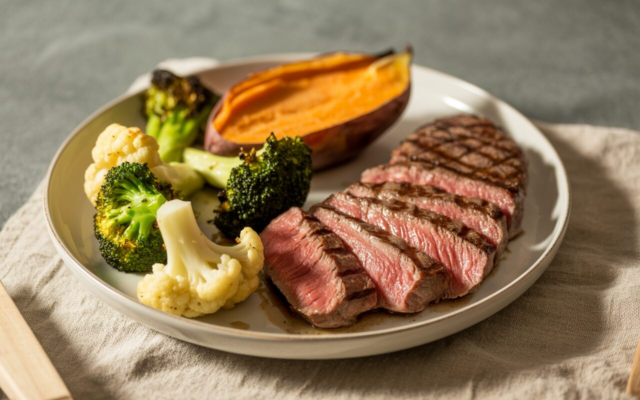
High-fiber vegetables: Leafy greens, broccoli, cauliflower, Brussels sprouts, zucchini, and starchy vegetables like sweet potatoes and white potatoes. The more colorful your plate, the broader the range of polyphenols and prebiotics you’re providing to your microbiome.
Fruit: Apples, bananas (especially slightly underripe ones, which are high in resistant starch), berries, pears, and peaches. Berries in particular, are rich in polyphenols that beneficially alter microbiome composition.
Whole grains: Brown rice, quinoa, farro, barley, and oats. These provide both soluble and insoluble fiber, feeding different bacterial populations.
Legumes and beans: Black beans, chickpeas, lentils, navy beans. These are among the highest-fiber foods available and outstanding prebiotic sources. (Note: if your gut is significantly compromised, beans may cause excessive gas and bloating initially. Start slow and reintroduce after a few weeks of gut healing work.) Here is a great article about how to start low and slow with increasing fiber.
Nuts and seeds: Almonds, walnuts, flax seeds, chia seeds high in fiber, healthy fats, and polyphenols.
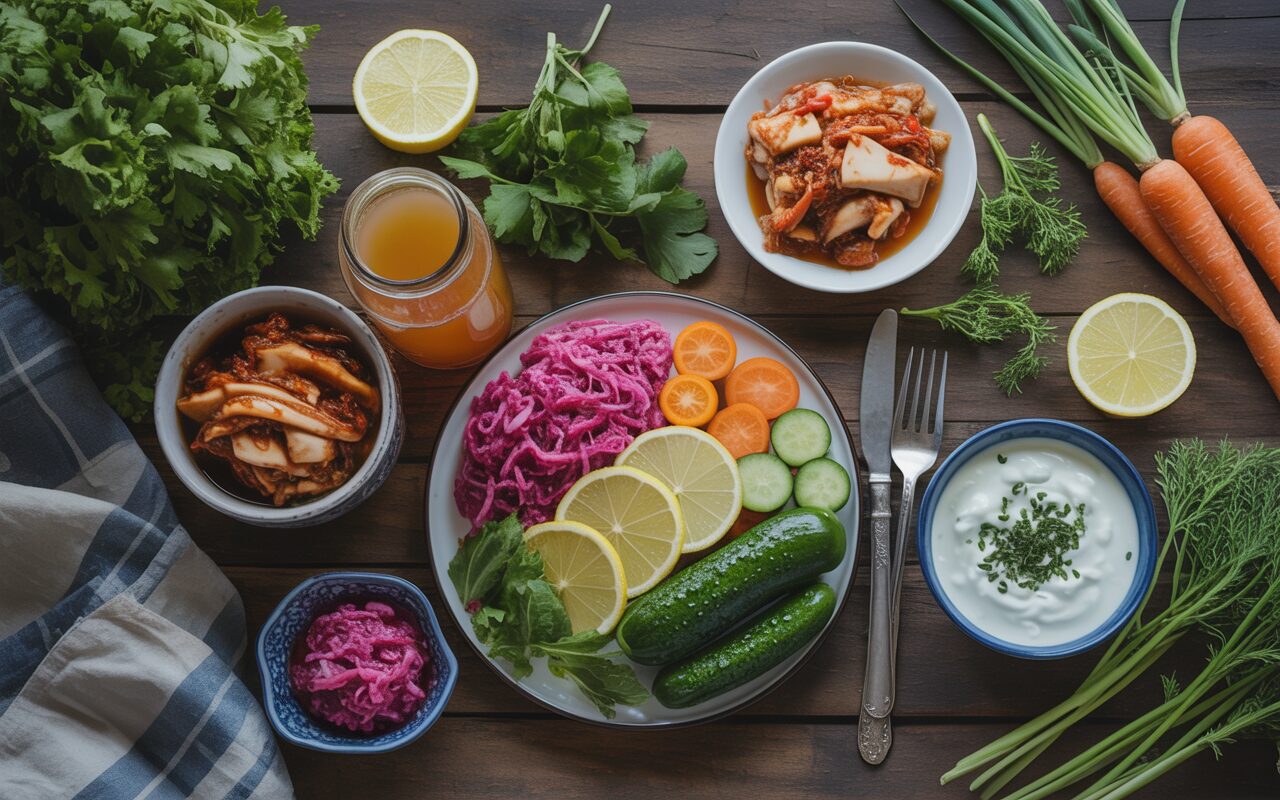
Fermented foods: Yogurt, kefir, kimchi, sauerkraut, kombucha, and naturally fermented pickles. These deliver live beneficial bacteria directly to the gut and have been shown in clinical research to increase microbiome diversity.
Healthy fats: Extra virgin olive oil, avocados,nuts and seeds, and fatty fish like salmon, provide anti-inflammatory monounsaturated fats and polyphenols that support the gut environment.
Step 2: Strategically Remove the Gut Disruptors
Once you’ve started adding, then we look at reducing the things working against you.
Minimize or Eliminate:
- Ultra-processed foods – high in additives, low in fiber, actively feeds dysbiotic bacteria
- Added sugars and refined carbohydrates – the preferred food source for less helpful bacteria
- Food sensitivities – wheat, dairy, and eggs are common culprits; an elimination protocol can help identify yours
- Environmental toxins – wash all produce thoroughly; prioritize organic for the EWG Dirty Dozen; review your cleaning products and personal care products for harmful chemicals.
In my clinical practice, I always tell clients: do what you can, not what’s perfect. Buying 100% organic everything isn’t realistic for most people. Start by cleaning up the foods you eat most frequently.\
Step 3: Support, Move, and Restore Balance
Targeted Supplementation
Supplementation isn’t a replacement for diet, but it can be a meaningful support — especially when the gut is significantly compromised and absorption is impaired.
- Probiotics: Look for multi-strain formulations with high CFU counts. The right probiotic is highly individual, but starting with a broad-spectrum option is a reasonable first step.
- L-Glutamine: An amino acid that directly fuels intestinal epithelial cells and supports repair of the gut lining.
- Fiber supplementation: If dietary fiber intake is very low, a soluble fiber supplement (gentler on a damaged gut) can be a useful bridge while you build up whole food sources.
- Omega-3 fatty acids: Anti-inflammatory and supportive of the gut-brain axis.
- Magnesium: Widely deficient, and important for gut motility and stress regulation.
- Multivitamin: If gut permeability is compromised, so is nutrient absorption — a quality multivitamin helps fill gaps while healing progresses.
Daily Movement
Move your body every day. This doesn’t have to be intense a 20-minute walk counts. An hour-long workout counts. What matters is consistency.
There’s a compelling bonus to outdoor exercise specifically: exposure to the diverse microbial environment of nature may itself contribute to microbiome diversity. So if you can take that walk outside, do it.

Nervous System Rebalancing
This is the step my clients most often want to skip, because it doesn’t feel as immediately “medical” as the diet piece. But it is clinically essential.
The goal is to regularly shift your nervous system from sympathetic dominance (fight or flight) into parasympathetic mode (rest and digest). Practically speaking:
- Meditation: Even 5–10 minutes daily produces measurable physiological effects
- Journaling: 10 minutes of reflective writing reduces cortisol
- Breathwork: Slow, diaphragmatic breathing directly stimulates the vagus nerve
- Mindful walking in nature: Combines movement, outdoor exposure, and nervous system downregulation
- Sauna sessions: 20 minutes has been shown to reduce inflammatory markers
Pick one. Do it daily. Over time, this is often the piece that clients report as most transformative — not just for their gut health, but for their relationships, their sleep, and their overall quality of life.
Where to Start If You’re at Square One
I know this is a lot. Don’t let it overwhelm you, that stress response isn’t helping your gut. 😊
If you’re starting from zero, here are the two steps I recommend to every new client:
1. Add one serving of plants to one meal. Not overhaul your entire diet. Just add one serving. Then build from there, aiming toward plants at every meal and snack. Try to get 5-9 servings of plant foods a day!

2. Move daily. Movement is a keystone habit it supports stress regulation, microbiome diversity, and gut motility all at once. Start with a 20-minute walk
Small, consistent actions compound. That’s the whole game.
The Main Takeaways For Healing Your Gut!
Your GI tract is not just where food gets processed. It’s the root of your immune function, your mental health, your metabolic health, and your inflammatory status. When it’s in balance, everything works better. When it’s not, the effects ripple outward into every system in your body.
The beautiful thing is that the gut is also remarkably resilient. With the right inputs — diverse, fiber-rich food, daily movement, stress management, and targeted support — it can heal.
In my clinical practice, I’ve watched clients resolve longstanding digestive issues, drop inflammatory weight, improve their mood and mental clarity, and get off medications they’d been on for years — all by starting with the gut.
That’s where we start. Every time.
Frequently Asked Questions About Gut Health
What are the signs of an unhealthy gut? This is one of the most common questions I get, and the answer might surprise you because the signs go way beyond just digestive symptoms. Yes, things like bloating, gas, constipation, loose stools, heartburn, and burping are all signs your gut is struggling. But so are things like chronic fatigue, brain fog, frequent illness, skin conditions like eczema and acne, mood issues like anxiety and depression, difficulty losing weight, sugar cravings that feel out of control, and hormonal imbalances. If several of those sound familiar, your gut is probably worth paying attention to. And honestly, in my clinical practice, most people have more than a few of these going on and have no idea they are connected.
What does healthy poop actually look like? I am so glad you asked (someone has to)! Healthy is once a day, every day. It should be well formed, medium brown, easy to pass, and not require a dramatic commitment of time or effort. If you are going every two or three days, that is constipation, even if it has been your normal your whole life. If you are going multiple times a day with loose or urgent stools, that is not normal either. Color matters too. You are looking for medium brown. Not green, not yellow, not pencil thin, and not accompanied by pain. Your daily BM is one of the clearest health reports your body gives you every single day. Pay attention to it!
How long does it take to heal your gut? Honestly, it depends on how long things have been out of balance and how consistently you implement changes. In my experience working with clients, most people start to notice meaningful shifts in energy, digestion, and overall wellbeing within four to six weeks of making real dietary changes. Deeper healing, especially for things like leaky gut or significant dysbiosis, can take three to six months or longer. I know that is not the quick fix answer people want to hear, but the gut did not get out of balance overnight, and it will not fully heal overnight either. The good news is that you will likely start feeling noticeably better long before you are fully healed, and that momentum is incredibly motivating.
What foods are the best for gut health? The single biggest thing you can do is increase the diversity of plants in your diet. Vegetables, fruits, whole grains, legumes, nuts, seeds, and fermented foods like yogurt, kefir, kimchi, and sauerkraut are all outstanding for your microbiome. Research shows that eating 30 or more different plant foods per week is associated with significantly better microbiome diversity, and before you panic about that number, it is more achievable than it sounds. Every different vegetable, fruit, grain, nut, seed, herb, and spice counts. You can hit 30 in a week without much effort once you start paying attention.
What is leaky gut and is it real? Yes, it is real, and it has a clinical name: intestinal permeability. It happens when the tight junctions between the cells lining your intestinal wall become compromised, allowing particles to pass into the bloodstream that should not be there. This triggers an immune response and chronic low grade inflammation, which as we discussed is linked to a very long list of health conditions. Leaky gut is a legitimate and well researched phenomenon, even if it does not always get taken seriously in conventional medicine. In my practice I see the downstream effects of it constantly, and addressing it is one of the most impactful things we can do for overall health.
Can gut health affect weight loss? Absolutely, and this is one of the things I talk about most with my clients. Certain gut bacteria directly influence hunger hormones, sugar cravings, and how your body processes and stores fat. The inflammation associated with dysbiosis also disrupts insulin and cortisol, both of which play a major role in weight gain and the inability to lose weight even when you feel like you are doing everything right. I cannot tell you how many clients have come to me frustrated after years of dieting with no results, and when we dig in, the gut is almost always part of the story. Healing your gut is often the missing piece that nobody talked to them about.
Can children have gut health issues? Yes, and this is something I feel really strongly about. Actually, the foundation of our gut microbiome is laid in the first few years of life, which means disruptions during that window, like frequent antibiotic use, formula feeding, C-section birth, and early exposure to processed foods, can have lasting effects. If your child struggles with frequent illness, eczema, behavioral issues, difficulty focusing, digestive complaints, or just seems to get sick constantly, their gut health is absolutely worth exploring. I wish someone had told me this when my son was little. It would have changed a lot.
Do I need to take a probiotic? Probiotics can be a helpful tool, but they are not a magic bullet and they are not a substitute for diet. Think of it this way: if you are not also feeding your good bacteria with fiber and diverse plant foods, taking a probiotic is a little like planting seeds in dry, depleted soil and wondering why nothing grows. That said, for many people a good quality multi-strain probiotic is a worthwhile addition, especially after antibiotic use or during periods of high stress. Look for one with multiple strains and a high CFU count, and when in doubt, working with a dietitian to find the right one for your specific situation is always going to get you better results than grabbing whatever is on sale at the drugstore.
Sally Twellman is a Registered Dietitian and Wellness Coach based in Texas. Want personalized support for your gut health? Sign up for her newsletter and receive the free Anti-Inflammatory diet guide. Reach out if you need extra 1:1 support
This post contains affiliate links, which means I may earn a small commission if you make a purchase through these links, at no extra cost to you. Thank you for supporting my work!.