Skip to content
Stress is something I talk about with almost every single client I work with. After years of practice, I have seen over and over again how chronic stress quietly undermines everything else we are trying to do for our health. We can be eating well, exercising, taking our supplements… and still feeling exhausted, puffy, wired, and like we just can’t get ahead. And so often, cortisol is a big piece of that puzzle.
Here’s what I want you to understand: cortisol is not just a “stress” problem. It is a whole-body problem. Chronically elevated cortisol affects your metabolism, your sleep, your immune system, your digestion, your mood, and your hormones. It is genuinely one of the most impactful things I work on with my clients because when we start to bring cortisol back into balance, so much else starts to shift. Energy improves. Sleep gets better. The stubborn weight around the middle starts to budge. The brain fog lifts.
The beautiful thing is that you have more control over this than you might think. Your daily habits are incredibly powerful here. Let’s talk about ten of the most effective, evidence-backed ways to lower cortisol naturally.
What Is Cortisol and Why Does Chronic Elevation Matter?
Cortisol is a hormone produced by your adrenal glands and it is not inherently bad. It wakes you up in the morning, fuels your focus, and helps your body respond to real stress. It is regulated by what is called the Hypothalamic-Pituitary-Adrenal axis (the HPA axis), which is essentially your body’s central stress response system. When your brain perceives a threat, the HPA axis triggers cortisol release. In a healthy system, cortisol rises, does its job, and comes back down. The problem is that our modern lives keep that system switched on almost constantly, and our bodies were not designed for that.
When cortisol stays elevated chronically, it can cause fatigue, anxiety, difficulty concentrating, insomnia, weight gain, and a weakened immune system. I see this in my practice all the time, and it is one of the reasons I take a holistic approach with clients rather than just looking at individual symptoms in isolation. Everything is connected.
The good news? Many of the lifestyle changes that help balance cortisol are good strategies to implement regardless of how high your levels are. You do not need a diagnosis to start benefiting from these habits.
10 Ways to Lower Cortisol Naturally
Here is a quick overview before we dive in:
- Eat to support your stress hormone
- Prioritize sleep
- Move your body (but don’t overdo it)
- Practice deep breathing daily
- Spend time in nature
- Dial back caffeine strategically
- Support your gut health
- Build in real rest and joy
- Nurture your relationships and social connection
- Consider targeted supplements with guidance
Now let’s break each one down.

1. Eat to Support Your Stress Hormone
Food is one of the most powerful and accessible tools you have for cortisol regulation, and I have a whole dedicated post on the [8 Best Foods to Lower Cortisol Naturally] that goes deep on this. The short version: a diet built around whole grains,
Research also suggests that severe calorie restriction may actually increase cortisol levels, which is one more reason that restrictive dieting is rarely the answer when stress and hormones are already dysregulated. Nourish, do not restrict.
2. Prioritize Sleep
If there is one thing I could get every single client to do first, it is this. Sleep is when your body repairs, resets, and rebalances its hormones. Lack of sleep disrupts cortisol’s natural rhythm, leading to higher levels upon waking and throughout the day.
Sticking to a consistent sleep schedule, limiting caffeine intake before bed, and avoiding blue light from screens in the hour before sleep are all effective strategies. I also love the idea of a simple wind-down ritual, even just 20 to 30 minutes of something quiet and screen-free. Your nervous system needs that transition time.
Aim for seven to nine hours. Not as a luxury. As a non-negotiable.

3. Move Your Body (But Don’t Overdo It)
Exercise is one of the most powerful cortisol regulators we have, and the research is really interesting here. Exercise is technically a stressor and a tough workout does spike cortisol as part of your body’s physiological challenge response, but that spike is temporary and beneficial. Regular physical activity actually trains your body to mount and then resolve cortisol responses more effectively over time.
The key word is moderate. Cardio exercises like brisk walking, light jogging, swimming, or cycling for about 30 minutes daily can reliably reduce cortisol, and intensity should feel energizing, not exhausting. Consistency matters far more than intensity here. I think people massively underestimate the power of simply taking a walk. A daily 30-minute walk will do more for your cortisol long-term than occasional brutal workouts followed by days on the couch.
So just go on a walk, and invite a friend for an even more wonderful stress-reducing experience!
RD Tip: A 15-minute walk after meals also helps manage blood sugar, which double-teams your cortisol levels. Two birds, one very pleasant stroll.
4. Practice Deep Breathing Daily
This one sounds almost too simple, and I think that is why people underestimate it. But the research on breathwork and cortisol is genuinely impressive. Several studies reveal the benefits of deep breathing exercises for at least five minutes, three to five times a day, showing it helps lower cortisol, ease anxiety and depression, and improve memory.
The reason it works so quickly is that slow, controlled breathing directly activates your parasympathetic nervous system, your body’s “rest and digest” mode, which signals to your adrenal glands that the threat has passed and it is safe to bring cortisol down. Even five minutes matters. Box breathing, 4-7-8 breathing, or simply slow diaphragmatic breathing all work well. Apps like Insight Timer or Calm are great if you want a little structure to get started.
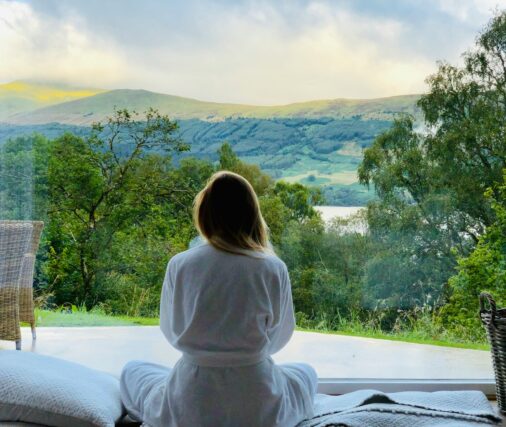
5. Spend Time in Nature
There is something genuinely restorative about being outside, and the science backs it up. A 2019 study found that spending just 20 minutes in a natural setting significantly lowered cortisol levels compared to those who spent the same time in urban settings.
You do not need to go on a hike (although if you love hiking, absolutely do that). Sitting on your porch, walking around the block, gardening, or even eating lunch outside counts. Simply being surrounded by trees, flowers, birds, and plants has a measurable calming effect on the nervous system. Speaking of gardening… it is one of my personal favorites and I will take any opportunity to recommend it.
6. Dial Back Caffeine (Strategically, Not Completely)
I am not here to take your coffee away. I drink coffee myself and I love it deeply. But timing and quantity matter when it comes to cortisol. Caffeine stimulates cortisol release, which is actually part of why it works so well in the morning. The issue is when we keep layering it throughout the day.
Those with chronic stress can experience adrenal dysfunction leading to imbalanced cortisol, and relying on caffeine to get through the day creates a vicious cycle where the caffeine wears off and exhaustion recurs. Try keeping caffeine to the morning hours and swapping that afternoon cup for green tea, which contains L-theanine to support calm focus without the cortisol spike. Your 3pm self will feel the difference.
7. Support Your Gut Health
The gut-brain connection is one of my favorite topics because it perfectly illustrates what I believe so deeply as a practitioner: that the body is one interconnected system. Evidence suggests a strong connection between the health of your gut microbiome and your cortisol levels, and building a diverse, well-fed microbiome is one of the most underrated things you can do for stress regulation.
Probiotic foods like yogurt, kefir, kimchi, sauerkraut, and kombucha support the good bacteria in your gut directly. Prebiotic fiber from foods like garlic, onions, oats, and bananas feeds them. I always tell clients to think of it as tending a garden. You have to feed and water the good stuff consistently for it to thrive.

Learn more about the [gut-brain axis] and dive deeper into fiber with these posts:
[44 High Fiber Foods You Should Be Eating]
7 High Fiber Foods to Help with Weight Loss
How to Add More Fiber Into Your Diet Without All the Bloating
8. Build in Real Rest and Joy
This one does not get enough attention in the wellness space, and I think it is because it feels less “clinical” than sleep or exercise. But research shows it matters enormously. Engaging with art, whether by viewing it or creating it, has been shown to lower cortisol levels and promote relaxation. Laughter also has a direct physiological effect on cortisol.
Playing an instrument, gardening, cooking, crafting, reading, watching something genuinely funny… these are not indulgences. They are nervous system medicine. In my clinical practice I encourage every client to identify at least one thing that brings them pure joy and protect time for it every single week. Non-negotiable.
9. Nurture Your Relationships and Social Connection
Focusing on relationships with friends and family can promote a healthier balance of hormones, and human connection is one of the oldest stress regulators we have. In our increasingly isolated, screen-mediated world, it is also one of the most underused.
This does not mean you need a packed social calendar. Even a genuine conversation with someone you love, a coffee or walk with a friend, or a text that turns into a real phone call can shift your nervous system in meaningful ways. We are wired for connection, and our cortisol levels reflect whether we are getting enough of it.
10. Consider Targeted Supplements (With Guidance)
Supplements are not a substitute for the habits above, but for some people they can be a genuinely helpful layer of support. Magnesium is one of the most important minerals for regulating hormones including cortisol, and vitamin B12, folate, and vitamin C can also help support cortisol metabolism.
Adaptogenic herbs like ashwagandha and rhodiola have also shown promise in the research for supporting the body’s stress response. That said, due to bio-individuality, supplements are never one-size-fits-all and quality varies enormously between products. I always recommend working with a registered dietitian or your doctor before adding them in, both to make sure they are appropriate for your unique physiology and to ensure you are getting a quality product. This is something I work through regularly in my clinical practice, and it is always a very individual conversation.
Main Takeaways to Lower Cortisol Naturally
Lowering cortisol naturally is not about one magic habit or one perfect food. It is about building a life that consistently signals safety to your nervous system. Sleep, movement, nourishment, rest, connection, breathwork, time in nature… these are not wellness trends. They are the fundamentals, and they work.
Start with one or two things from this list that feel most accessible to you right now. Build from there. Your body is incredibly responsive when you give it what it needs, and I have seen this transformation happen with clients time and time again. It does not have to be perfect. It just has to be consistent.

Frequently Asked Questions About Lowering Cortisol Naturally
How long does it take to lower cortisol naturally?
This really depends on the person and how many lifestyle factors are at play. Some people notice shifts in energy, sleep, and mood within a few weeks of making consistent changes. For others, especially those dealing with longer-term chronic stress, it can take a few months to feel a meaningful difference. The key word is consistent. Small daily habits compound over time in a way that one-time efforts simply do not. This is something I see play out with clients regularly, and the ones who make the most progress are almost always the ones who focus on building sustainable habits rather than looking for a quick fix.
Can you lower cortisol without medication?
Absolutely, and for most people with lifestyle-related cortisol elevation, natural strategies are incredibly effective. Sleep, movement, diet, breathwork, gut health, and stress management can all meaningfully shift cortisol levels without any medication. That said, if you are experiencing severe symptoms or suspect an underlying condition like Cushing’s syndrome or adrenal dysfunction, it is always worth talking to your doctor. Natural lifestyle strategies and medical support are not mutually exclusive, and sometimes both are appropriate.
What are the signs that your cortisol is too high?
Some of the most common signs include persistent fatigue despite getting enough sleep, weight gain especially around the midsection, sugar and salt cravings, brain fog, anxiety, irritability, poor sleep quality, frequent illness, and feeling wired but exhausted at the same time. That last one, feeling simultaneously tired and unable to wind down, is one of the most telltale signs I see in my practice. If several of these resonate with you, it is worth paying attention to.
Does exercise raise or lower cortisol?
Both, actually, and the nuance here matters. Exercise temporarily spikes cortisol as part of your body’s stress response during the workout itself. But regular, moderate exercise lowers baseline cortisol levels over time and trains your HPA axis to resolve cortisol responses more efficiently. The key is keeping intensity at a moderate level. Chronic overtraining or very intense exercise without adequate recovery can actually keep cortisol elevated rather than bring it down.
Is cortisol belly real?
Yes, and there is real science behind it. Chronically elevated cortisol causes the body to preferentially store fat in the abdominal area, specifically visceral fat, which sits deep around your organs. This is partly why stress and poor sleep so often show up as stubborn midsection weight that feels impossible to shift no matter how well you eat. Addressing cortisol directly, through sleep, diet, stress management, and the other strategies in this post, is often a missing piece for people who feel stuck with belly fat despite doing “everything right.”
What supplements help lower cortisol?
The ones with the most research behind them are magnesium, ashwagandha, rhodiola, vitamin C, and B vitamins. Magnesium in particular is something I use frequently in my clinical practice because deficiency is so common and its impact on the stress response and sleep is well established. That said, due to bio-individuality, what works well for one person may not be the right fit for another. Quality also varies enormously between supplement brands. I always recommend working with a registered dietitian or your healthcare provider before adding supplements in rather than self-prescribing from the wellness aisle.
Can stress alone raise cortisol even if I eat well?
Yes, absolutely. Diet is one piece of the cortisol puzzle, but it is not the whole picture. Psychological stress, poor sleep, overexercising, social isolation, and even negative self-talk can all drive cortisol elevation independently of what you eat. This is exactly why I take a whole-body, holistic approach with clients rather than just focusing on food. Nutrition is foundational and incredibly powerful, but it works best when the other pillars of lifestyle are also being addressed.
Do I need to test my cortisol levels?
For most people, no. Cortisol fluctuates significantly throughout the day, which makes a single test difficult to interpret. Your doctor may recommend testing if your symptoms are severe or suggest an underlying condition. For the majority of people though, paying attention to how you feel and implementing the lifestyle strategies in this post is a very reasonable starting point. Many of the habits that support healthy cortisol levels are simply good for your overall health regardless of where your levels actually sit.