A Simple, Anti-Inflammatory Way to Eat for Gut Health, Energy, and Long-Term Wellness
If you’ve been searching for an eating pattern that truly checks all the boxes, reduces inflammation, supports long-term health, and actually feels doable… well, I’m so excited you are here then! The Mediterranean diet has long been celebrated as one of the healthiest ways to eat, but today I’m putting a spin on it to check a couple of boxes that you are probably focused on: Getting enough protein and fiber.
This isn’t about rigid rules or cutting out entire food groups. Instead, it’s about intentionally building meals around foods that naturally deliver both high protein and high fiber, while keeping that beautiful anti-inflammatory foundation that makes the Mediterranean Diet approach so effective. Let’s talk about how to make this work in real life.
Why Protein and Fiber Matter
Before we dive into the how, let’s talk about the why. Protein and fiber are an incredibly powerful duo, and when you prioritize them together, things really start to click.
Protein is essential for maintaining muscle mass, supporting metabolism, and keeping you satisfied between meals. It also provides the building blocks your body needs for everything from hormone production to immune function. As we age, getting enough protein becomes even more important for preserving strength, energy, and resilience.
Fiber is your gut’s best friend. It feeds beneficial gut bacteria, helps regulate blood sugar, supports heart health, and keeps digestion moving smoothly (you know what I mean). Most people only get around 15 grams of fiber per day, when optimal intake is closer to 25 to 35 grams.
When you combine protein and fiber with the anti-inflammatory foundation of Mediterranean eating, think olive oil, omega-3-rich fish, colorful vegetables, and antioxidant-packed herbs, you end up with a way of eating that supports your body at every level.
The Foundation: Mediterranean Principles
The traditional Mediterranean diet emphasizes whole, minimally processed foods and healthy fats. In practice, that looks like:
- Abundant vegetables and fruits at every meal
- Whole grains instead of refined grains
- Healthy fats, especially extra virgin olive oil
- Fish and seafood several times per week
- Moderate amounts of poultry, eggs, and dairy
- Legumes, nuts, and seeds as daily staples
- Herbs and spices instead of heavy salt
- Red meat only occasionally
- Minimal processed foods and added sugars
This approach naturally helps reduce inflammation thanks to its focus on omega-3s, antioxidants, and plant compounds. Now let’s layer in a more intentional protein and fiber focus. Download this Mediterranean diet Recipe Bundle for Free.
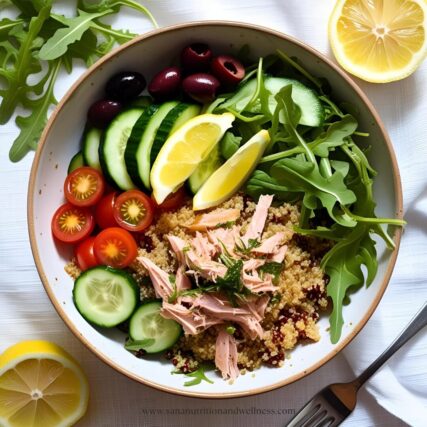
Building Your High-Protein, High-Fiber Mediterranean Plate
The key is choosing foods that deliver both protein and fiber while staying true to Mediterranean principles. Here’s your roadmap.
Start with Legumes
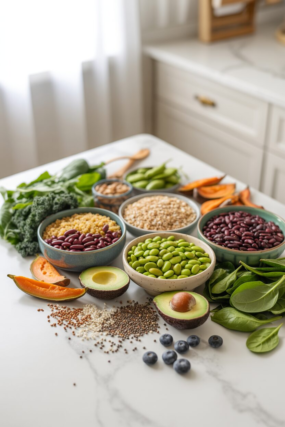
Legumes are the unsung heroes of this way of eating. One cup of cooked lentils provides about 18 grams of protein and 16 grams of fiber. Chickpeas, white beans, cannellini beans, and black beans are equally impressive.
Make legumes a daily staple by adding them to salads, soups, grain bowls, and even breakfast dishes. Hummus absolutely counts too. Spread it on whole-grain toast or use it as a veggie dip. Keeping high-quality canned beans and lentils on hand makes this incredibly easy.
Embrace Fatty Fish
Salmon, sardines, mackerel, and anchovies are rich in protein and packed with anti-inflammatory omega-3 fats. Aim for fish at least three times per week. A four-ounce serving of salmon delivers about 25 grams of protein.
Pair fish with fiber-rich sides like roasted vegetables, quinoa, or a big colorful salad. Wild-caught frozen fish or sustainably canned options are affordable and convenient ways to hit this goal.
Choose Whole Grains Wisely
Not all grains offer the same fiber benefits. Focus on farro, bulgur, barley, quinoa, and whole grain pasta. Farro provides about 5 grams of fiber per cup and a decent amount of protein too.
A simple bowl of farro topped with white beans, cherry tomatoes, cucumbers, feta, and olive oil is Mediterranean perfection. Stocking your pantry with a few go-to whole grains makes meal building easy.
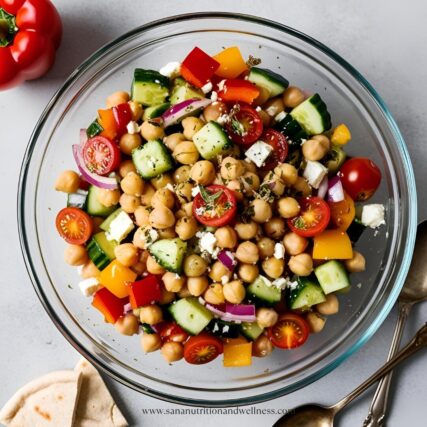
Load Up on Vegetables
Vegetables are your fiber MVPs, and many provide more protein than people realize. Think artichokes, Brussels sprouts, broccoli, spinach, and peas.
Aim to fill half your plate with vegetables at lunch and dinner. Roast them with olive oil and herbs, toss them into whole grain pasta, or blend them into soups. A good sheet pan and quality olive oil go a long way here.
Don’t Forget Greek Yogurt and Cottage Cheese
Greek yogurt and cottage cheese are Mediterranean-approved and incredibly protein-dense. Greek yogurt provides about 15 to 20 grams of protein per cup, and cottage cheese offers similar amounts.
Top them with berries, nuts, and a drizzle of honey for breakfast, or use them as bases for savory dips and dressings. Pair with fruit or whole grain crackers for added fiber. High-protein yogurt brands and cultured cottage cheese options can be especially helpful.
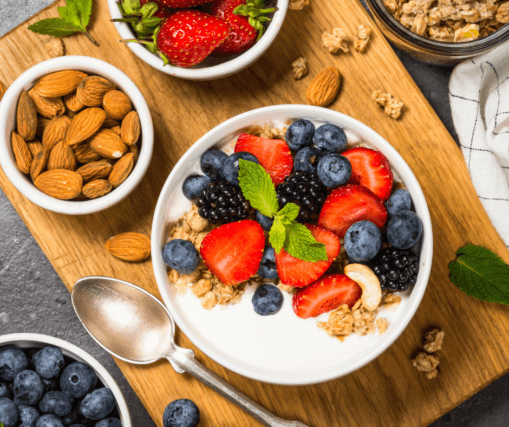
Snack on Nuts and Seeds
Almonds, walnuts, pistachios, chia seeds, and flaxseeds provide protein, fiber, and healthy fats. A quarter cup of almonds offers about 6 grams of protein and 4 grams of fiber.
Sprinkle seeds onto salads and yogurt, or keep portioned nuts on hand for easy snacks. Buying nuts and seeds in bulk or pre-portioned packs can make consistency easier.
Include Eggs Regularly
Eggs are a complete protein source at about 6 grams per egg. While they don’t contain fiber, they pair beautifully with fiber-rich foods.
Think veggie-loaded omelets, eggs over sautéed greens and beans, or hard-boiled eggs alongside fresh vegetables and whole grain crackers.
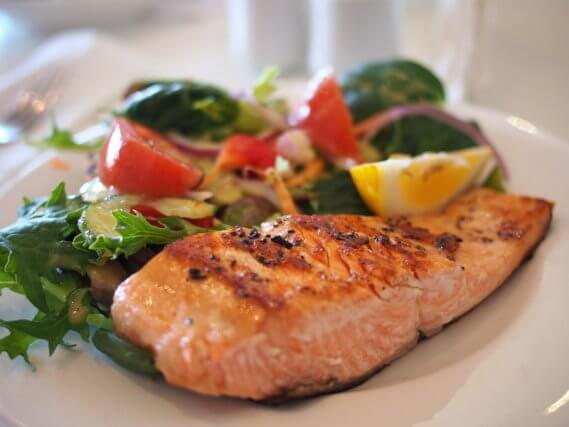
Sample Day of High Fiber, High Protein Mediterranean Diet
Here’s what this approach might look like in real life.
Breakfast:
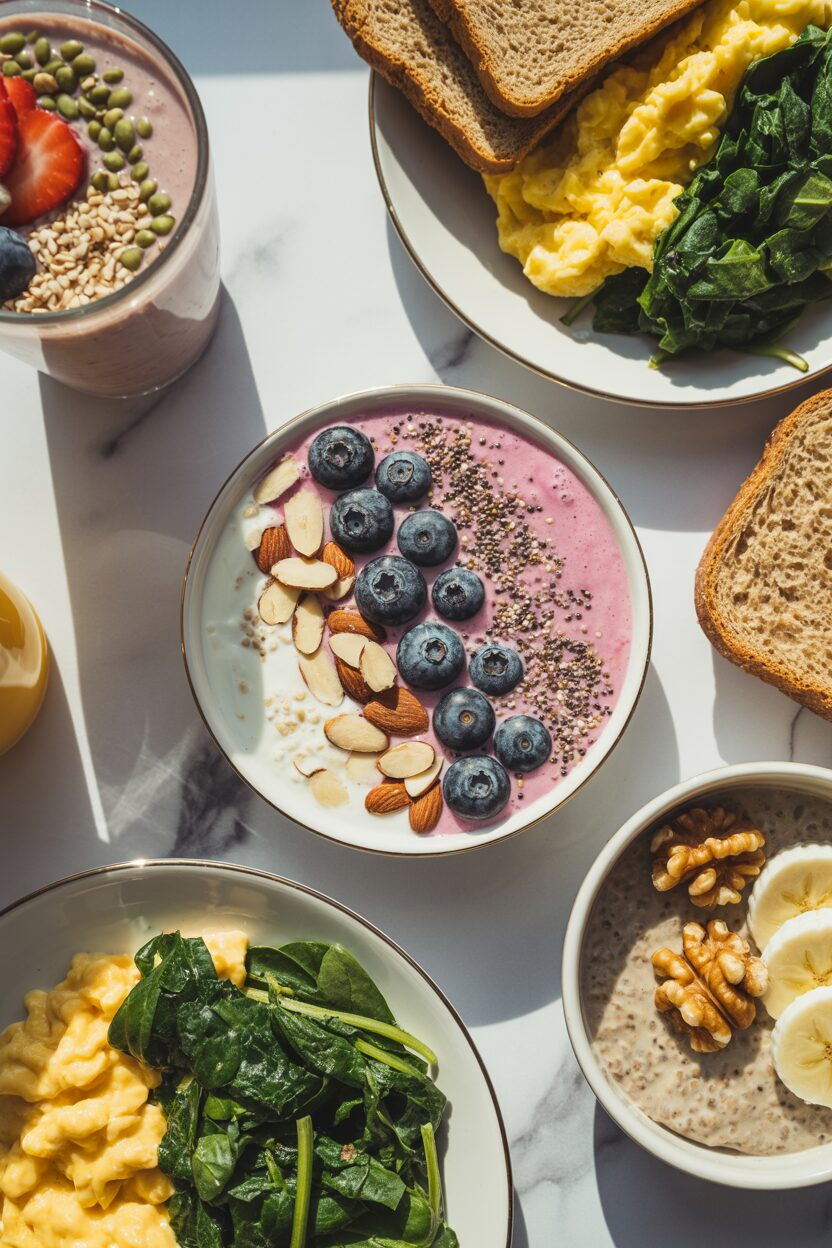
Greek yogurt with berries, ground flaxseed, chopped walnuts, and a drizzle of honey
Protein ~25g | Fiber ~10g
Lunch:
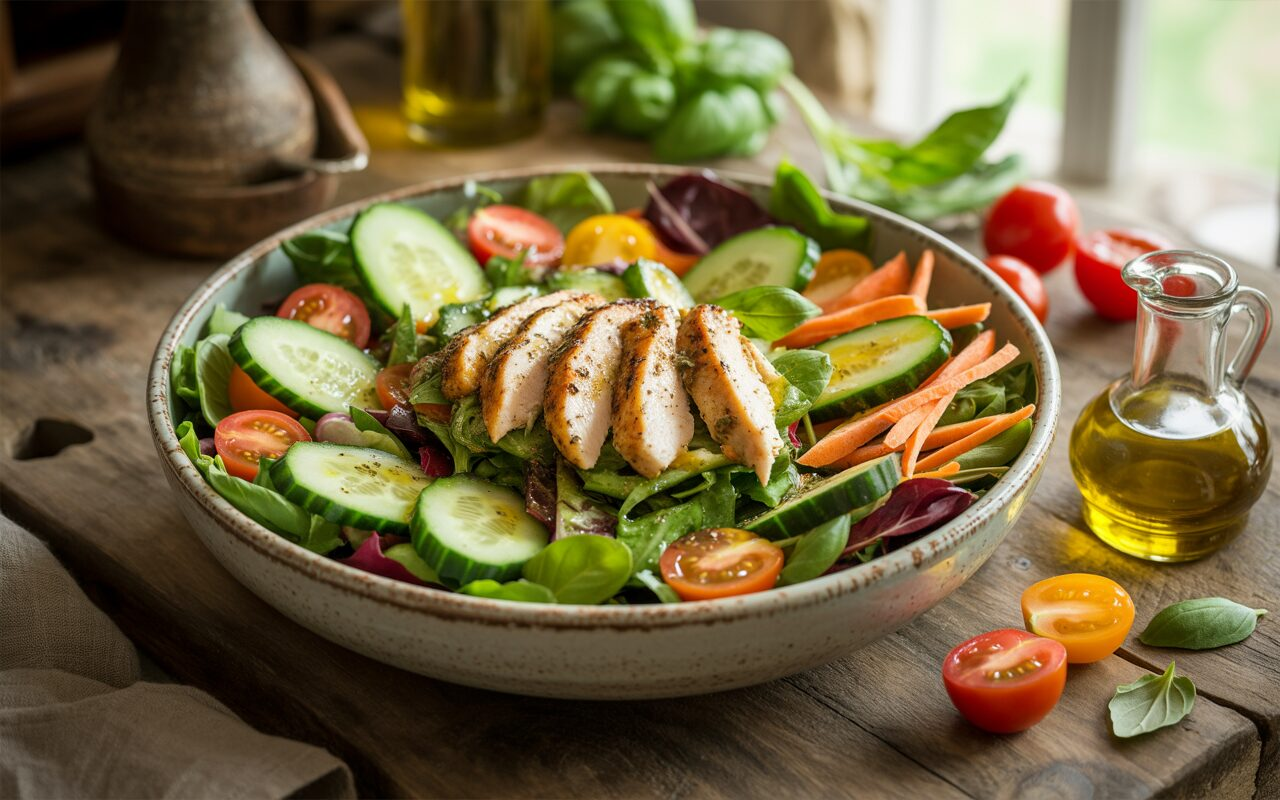
Mediterranean lentil salad with cucumbers, tomatoes, red onion, parsley, feta, and lemon-olive oil dressing, served with whole grain pita
Protein ~22g | Fiber ~18g
Snack:
Hummus with raw vegetables and a handful of almonds
Protein ~10g | Fiber ~8g
Dinner:
Grilled salmon over farro with roasted Brussels sprouts, red peppers, and a side of white bean ragù
Protein ~40g | Fiber ~15g
Daily Total: ~97g protein | ~51g fiber
How To Make It Sustainable
This is where this approach really shines. You’re not tracking every gram or measuring every bite. You’re simply choosing foods that naturally support your goals.
Shop the perimeter of the grocery store. Keep your pantry stocked with canned beans, lentils, whole grains, and canned fish. Prep a few basics each week, like a batch of lentils or chopped vegetables, so nourishing meals are always within reach.
Most importantly, enjoy your food. Drizzle olive oil generously, season boldly with garlic and herbs, share meals with people you love, and savor what you’re eating. The Mediterranean lifestyle isn’t just about nutrition, it’s about pleasure, connection, and sustainability.
Bottom Line
A high-protein, high-fiber Mediterranean diet gives you the best of all worlds: steady energy, reduced inflammation, better digestion, and meals that actually satisfy you.
By prioritizing legumes, fish, whole grains, vegetables, Greek yogurt, nuts, and seeds, you create an eating pattern that supports both how you feel today and your long-term health.
Start small. Add white beans to your next soup. Swap refined pasta for farro. Choose Greek yogurt instead of regular. Small, consistent shifts add up in a big way.
You’ve got this.
Ready for Personalized Support?
If you love this approach but want help tailoring it to your body, lifestyle, gut health, or inflammation concerns, I offer 1:1 holistic nutrition coaching. We’ll build a plan that feels realistic, supportive, and sustainable, not restrictive.
👉 Learn more about working with me here or reach out when you’re ready to get started.
Some links in this post may be affiliate links, which means I may earn a small commission at no extra cost to you. I only recommend products I personally use, trust, or would suggest to clients.