Skip to content
A Dietitian-Approved Guide to Foods That Calm Your Stress Hormone Naturally
In our modern medical system, there has often been a divide between body and mind. People experience stress, depression, and anxiety, and the focus tends to go straight to thoughts through therapy and brain chemistry through medication… and that’s it. But I’m here to tell you there is so much more you can do. Because here’s the thing: when you really think about it, it’s almost obvious. Our body and mind are in constant conversation with each other. Our physical body and its signals directly impact our mood, our brain, and how we feel. Food is chemistry. And when it comes to stress, what’s happening on your plate is deeply connected to what’s happening in your nervous system.
That’s where cortisol comes in.
If you’ve been feeling wired but tired, noticing some extra fluff around your midsection, craving sugar at 3pm like it’s your job, or just feeling like your stress response is stuck in the “on” position… cortisol might be part of the story. And the beautiful thing is, your food is one of the most accessible levers you have to start shifting it.
Let’s talk about it!
First, What Even Is Cortisol?
Cortisol is a hormone made by your adrenal glands, and it’s not inherently bad. It wakes you up in the morning, helps you respond to stress, and even plays a role in regulating inflammation and blood sugar. Short-term cortisol spikes are totally normal and healthy.
The problem is chronic elevation. When your cortisol is persistently high (hi, modern life), it can contribute to weight gain around the belly, disrupted sleep, blood sugar dysregulation, increased inflammation, mood swings, and a general sense of feeling… frazzled.
The good news? Research consistently shows that a nutrient-dense diet full of whole fruits and vegetables, whole grains, healthy fats, and foods rich in probiotics and prebiotics can help support healthier cortisol levels. You don’t have to overhaul your whole life. You just have to be more intentional about what you’re putting on your fork.
8 Best Foods to Lower Cortisol Naturally
Think of this less like a rigid meal plan and more like a general direction. Here are the food categories that deserve a starring role on your plate.
1. Fatty Fish and Healthy Fats (Especially Omega -3s)
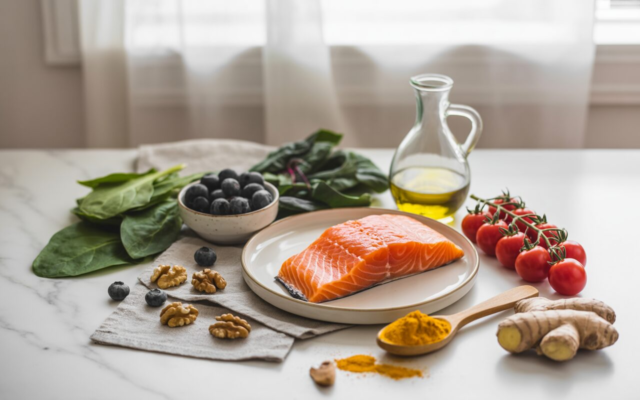
If there’s one dietary pattern that keeps showing up in the cortisol research, it’s the importance of healthy fats. In a study of over 2,000 adults, high cortisol levels were linked with low
Foods to lean into: fatty fish (salmon, sardines, mackerel), walnuts,
Olive oil also deserves a shoutout here. Research suggests that a Mediterranean diet rich in polyphenols and healthy fats may help reduce cortisol levels, and olive oil is one of its cornerstones.
2. Leafy Greens and Magnesium-Rich Foods
Magnesium is one of my favorite underrated nutrients, and most people aren’t getting enough of it. Here’s why it matters for cortisol: magnesium helps regulate neurotransmitters in the brain that play a role in anxiety, like serotonin and GABA, and helps control stress responses by actually decreasing cortisol release.
Translation: magnesium is basically your nervous system’s chill pill.
Leafy greens like spinach, kale, and Swiss chard are loaded with it. So are almonds, cashews, pumpkin seeds, and dark chocolate (yes, really, we’ll get there). Leafy greens also contain folate and B vitamins that support mood by boosting production of feel-good neurotransmitters like serotonin and dopamine.
Reducing inflammation is so deeply connected to all of this too. Read more about that here: [anti-inflammatory foods post].
3. Berries and Antioxidant-Rich Foods
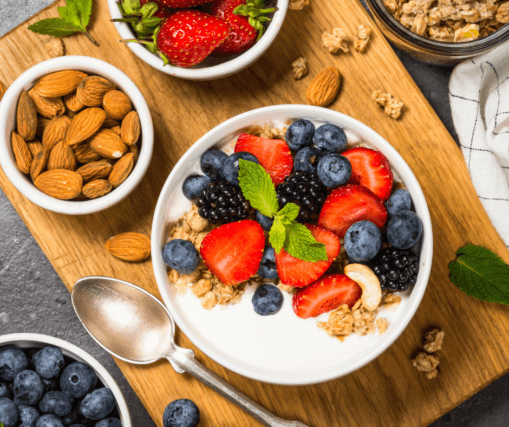
Chronic stress creates oxidative stress in the body (stressception, my word). Antioxidant-rich foods help fight back. The flavonoids in blueberries in particular may reduce oxidative stress in the brain, which contributes to anxiety and mood disorders.
Beyond blueberries, think: strawberries, raspberries, blackberries, cherries, pomegranate, beets, dark chocolate (still yes), green tea, and colorful vegetables across the board. The more color on your plate, the better.
4. Tryptophan-Rich Proteins
You’ve probably heard of tryptophan in the context of Thanksgiving turkey making you sleepy. But let’s go a little deeper, because this is where it gets really interesting.
You’ve also probably heard of serotonin, the feel-good neurotransmitter that antidepressants like SSRIs work to support. Well, tryptophan is the amino acid your body uses to make serotonin. Without enough tryptophan (and the micronutrients needed to convert it, like magnesium and B6), serotonin production suffers, which makes it harder for your body to regulate cortisol and leaves you feeling fried and less equipped to handle everyday stress.
Here’s where it gets even cooler: tryptophan is also used to make melatonin, your sleep hormone. Without enough melatonin, sleep quality drops. And without quality sleep, cortisol rises, bandwidth shrinks, and everything feels harder. It’s all one big connected loop.
Isn’t chemistry cool!
Great tryptophan sources include: turkey, eggs, salmon, oats, bananas, pumpkin seeds, tofu, and dairy. This is also a great argument for making sure you’re getting enough protein overall. If you want to geek out on that, check out my high protein foods post.
5. Whole Grains and Complex Carbs
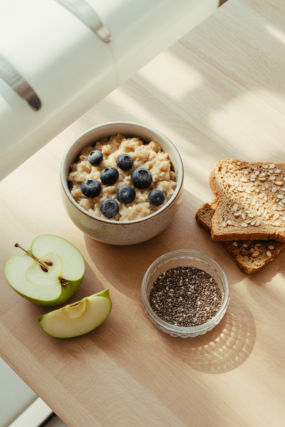
Carbs got such a bad reputation for a while, but the research on cortisol actually paints a more nuanced picture. A whole-food diet intervention found that increasing dietary carbohydrates as part of a healthy eating pattern was associated with reduced cortisol levels and a dampened stress response.
The key words are whole food carbs: oats, brown rice, quinoa, sweet potatoes, legumes, and whole grain bread. These stabilize blood sugar (which is huge, because blood sugar crashes trigger cortisol spikes), and they’re also high in fiber. Speaking of…
6. Fiber and Gut-Friendly Foods
Your gut and your stress response are way more connected than most people realize. Evidence suggests a strong link between a healthy gut microbiome and reduced stress and anxiety, with one study showing that students who consumed a daily probiotic drink had significantly lower cortisol levels after 12 weeks.
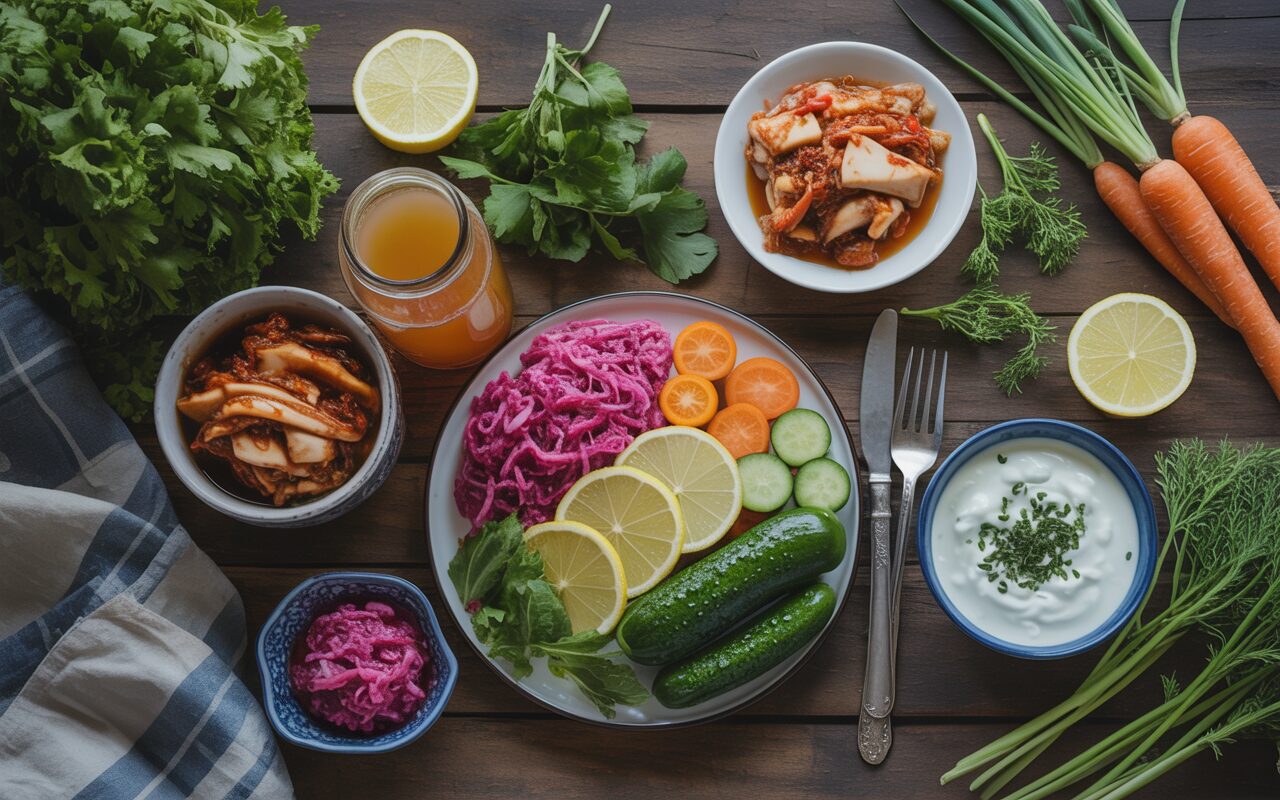
To support your gut (and therefore your cortisol), focus on probiotic foods like yogurt, kefir, sauerkraut, kimchi, and kombucha, alongside prebiotic and high-fiber foods like onions, garlic, oats, bananas, asparagus, and legumes.
I go deep on this in my [high fiber foods post], but the short version is that fiber feeds your good gut bacteria, and happy gut bacteria equals a calmer stress response. It’s a beautiful little chain reaction.
7. Green Tea
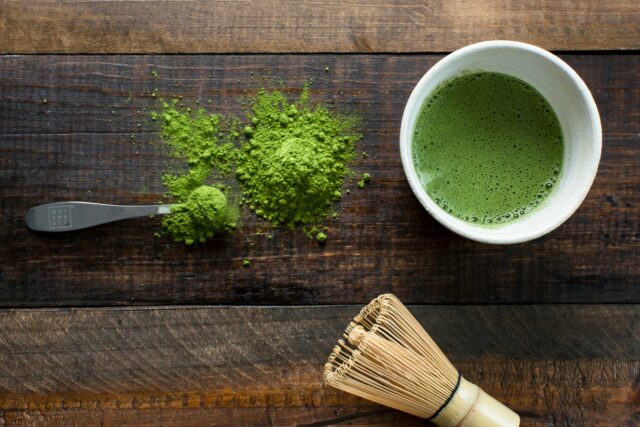
Ok, I LOVE my coffee. It is honestly one of my favorite things about my morning. So this isn’t a coffee or green tea thing, it’s a coffee and green tea situation. But adding green tea into your rotation, especially in the afternoon, is genuinely worth it. Green tea contains catechins, polyphenols, and L-theanine, a calming compound linked to reduced stress and increased mental alertness.
L-theanine is actually kind of magic. It promotes calm focus without making you feel sleepy. Matcha is another great option and gives you that same L-theanine benefit in a more concentrated form.
So if you need a little pick-me-up for that 2pm slump, green tea is your answer.
8. Dark Chocolate
I love sharing this one…
A square or two of good dark chocolate is genuinely one of the most enjoyable “health foods” out there. I’m choosing to view it as medicine and I encourage you to do the same.
What to Limit
I’m not here to give you a list of foods to fear, but there are a few things worth being mindful of if cortisol is a concern.
Excess caffeine, especially later in the day, can keep cortisol elevated when it should be tapering off naturally. I still have my morning coffee. I just try not to be on my fourth cup at 3pm.
Ultra-processed foods and added sugar are worth pulling back on too. One study found that a diet high in added sugar, refined grains, and saturated fat led to significantly higher cortisol levels compared to a diet built around whole grains, fruits, vegetables, and healthy fats. This doesn’t mean never eat a cookie. It means the everyday foundation matters.
Alcohol can also disrupt both sleep quality and cortisol rhythms in ways that quietly compound over time.

What Does a Cortisol-Lowering Diet Actually Look Like?
Here’s the thing: you don’t need a rigid “cortisol diet.” You need an overall eating pattern that’s anti-inflammatory, gut-supportive, blood sugar-stable, and nutrient-dense. Which, honestly? Is exactly what I talk about all over this blog.
Think Mediterranean–ish. Filling half your plate with vegetables at lunch and dinner, pairing them with whole grains, legumes, and fatty fish a few times a week, using olive oil as your main fat, and snacking on fruit and nuts is about as solid an anti-cortisol foundation as you can build. Incorporate as many of the foods from above as you can and you will be golden.
Big Take-Aways about Eating To Lower Cortisol
Your food is information for your body. Every meal is a chance to either pour a little gasoline on your stress response or gently put it out. This isn’t about perfection. It’s about consistently choosing foods that support your nervous system, stabilize your blood sugar, feed your gut, and give your adrenal glands the nutrients they need to function well.
Start with one or two of the categories above. Add some salmon this week. Throw some spinach in your smoothie. Grab the dark chocolate instead of whatever’s in the vending machine. Small shifts, done consistently, add up to a body that handles stress a whole lot better.
And when you’re ready for the next step, check out this [Lower Cortisol Naturally Meal Plan].
Frequently Asked Questions About Cortisol and Diet
What is the best food to lower cortisol?
There isn’t one single magic food, but if I had to pick a category, fatty fish rich in
How quickly can diet change cortisol levels?
This varies a lot from person to person, but research suggests that consistent dietary changes over several weeks can begin to meaningfully shift cortisol patterns. Think of it less like a quick fix and more like a slow, steady dial-down. The good news is that many people notice improvements in energy, sleep, and mood relatively quickly once they start eating in a way that supports their nervous system.
Does coffee raise cortisol?
It can, yes. Caffeine stimulates cortisol release, which is actually part of why that morning cup feels so energizing. The issue is timing and quantity. A morning coffee is generally fine for most people. Multiple cups throughout the day, especially past noon, can keep cortisol elevated when it should naturally be tapering. If you’re sensitive to caffeine or already dealing with high stress, it’s worth paying attention to how coffee makes you feel later in the day.
What foods spike cortisol?
The biggest culprits are ultra-processed foods, foods high in added sugar, refined carbohydrates, and excess saturated fat. Research shows that a diet heavy in these foods is associated with significantly higher cortisol levels compared to a whole-food, plant-forward diet. Alcohol and excess caffeine also play a role.
Is dark chocolate really good for cortisol?
Yes, and I am delighted to tell you this. Dark chocolate at 70% cacao or higher contains flavonoids and magnesium, both of which support cortisol regulation. Studies have linked compounds found in cocoa to lower cortisol levels. A square or two a day is genuinely a legitimate wellness strategy. You’re welcome.
Can magnesium help lower cortisol?
Absolutely. Magnesium is one of the most important nutrients for stress regulation and most people are not getting enough of it. It helps regulate neurotransmitters like serotonin and GABA, and directly supports the body’s ability to decrease cortisol release in response to stressors. Food sources like leafy greens, pumpkin seeds, almonds, and dark chocolate are great ways to get it in daily.
Do I need to test my cortisol levels?
Not necessarily. Cortisol can be measured through blood, saliva, or urine testing, but levels fluctuate significantly throughout the day, which makes a single test tricky to interpret. For most people, paying attention to symptoms (poor sleep, belly weight gain, constant fatigue, sugar cravings, feeling wired but exhausted) is a reasonable starting point. If symptoms are severe or persistent, it’s worth talking to your doctor or a registered dietitian about whether testing makes sense for you.