Skip to content
How to Build a Balanced Morning Meal That Keeps You Full, Focused, and Energized All Day
Let’s be real for a second. Most of us grew up thinking a “healthy breakfast” meant a bowl of cereal, maybe some OJ, and we’re out the door. And then we’d crash by 10am, wonder why we were starving before lunch, and reach for whatever was in the break room. Sound familiar?
Here’s the thing: it wasn’t your willpower. It was your plate.
Breakfast sets the tone for your entire day, and I don’t mean that in a fluffy, motivational-quote kind of way. I mean it literally affects your blood sugar, your energy, your hunger cues, even your mood by lunchtime. So today I want to walk you through my go-to Healthy Breakfast Plate Formula: protein, fiber, and fat, and why getting all three on your plate in the morning is genuinely one of the simplest things you can do to feel better every single day.
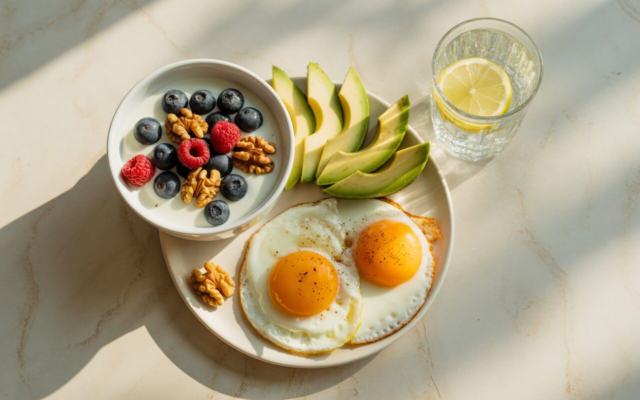
What Is the Breakfast Plate Formula?
The formula is simple: every breakfast should have a source of protein, a source of fiber, and a source of healthy fat. That’s it. No calorie counting, no complicated macros, no elimination of entire food groups. Just three things working together on your plate.
When these three nutrients show up together, your body gets what it needs to stabilize blood sugar, keep hunger hormones in check, and give you sustained energy instead of a spike and crash. Think of them as a team. Each one does something important on its own, but together, they’re really powerful.
Protein: The Anchor of Your Morning
Protein is the non-negotiable for me. If I had to pick one thing to prioritize at breakfast, it would be this. Protein slows digestion, helps regulate your appetite hormones (specifically ghrelin, which is your hunger hormone), and keeps you feeling satisfied for hours, not minutes.
You want to aim for roughly 20 to 30 grams of protein at breakfast. I know that sounds like a lot if you’re used to grabbing a granola bar on the way out, but once you start hitting that target, you will feel the difference fast.
Great protein sources for breakfast:
- Eggs (2 to 3 give you about 12 to 18 grams)
- Greek yogurt (plain, full fat gives you around 15 to 20 grams per cup)
- Cottage cheese (a personal favorite that is so underrated right now)
- A quality protein shake or smoothie with protein powder
- Turkey sausage or smoked salmon if you’re feeling fancy
Fiber: Your Gut’s Best Friend (and Your Blood Sugar’s Too)
Fiber is the piece most people are missing from their breakfast, and it’s a big deal. Fiber slows the absorption of sugar into your bloodstream, which means no sharp spike, and no sharp crash. It also feeds the beneficial bacteria in your gut, which has a ripple effect on everything from digestion to inflammation to mood.
Aim for at least 5 to 8 grams of fiber at breakfast. This is easier than it sounds, especially if you’re including fruits, vegetables, or whole grains.
Easy ways to add fiber in the morning:
- Berries (raspberries and blackberries are especially high in fiber)
- Chia seeds or ground flaxseed stirred into yogurt or a smoothie
- Oats (steel-cut or rolled, not the instant packets with added sugar)
- Avocado (yes, it counts as both fiber and fat, which is a win)
- Vegetables in a scramble or omelet (spinach, peppers, onions all work great)
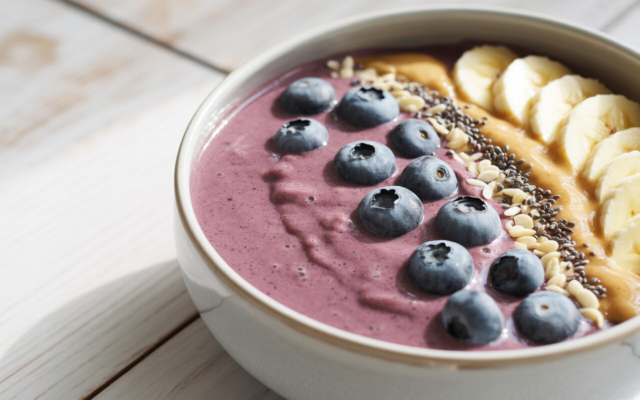
Healthy Fat: The Nutrient We Were Told to Fear (But Shouldn’t)
Fat got a really bad reputation for a while, and a lot of us are still carrying that old messaging around without realizing it. But healthy fats are essential for hormone production, brain function, and, importantly, satiety. Fat takes a long time to digest, which means it keeps you feeling full and satisfied long after your meal is done.
The key is the type of fat. We want mostly unsaturated fats, the kind found in whole foods, rather than heavily processed sources.
Go-to healthy fats for breakfast:
- Avocado or avocado oil
- Nut butter (almond, peanut, cashew) with no added sugars or oils
- Nuts and seeds (walnuts, hemp seeds, pumpkin seeds)
- Whole eggs (the yolk has all the good stuff)
- Full-fat coconut milk or a drizzle of olive oil in a savory scramble
What to Watch Out For
Now that you know what to include, let’s talk about the common breakfast traps that seem healthy but really work against you.
Fruit juice on its own spikes blood sugar fast with no fiber or protein to slow it down. Most flavored yogurts have more sugar than a candy bar. Granola bars are often just glorified cookies. And that low-fat everything era? Fat was removed and replaced with sugar to make things taste good, so if something is labeled low-fat, check the sugar content before you buy it.
The goal isn’t to be perfect. The goal is to be intentional. A breakfast with all three pillars, even a simple one, is always going to serve you better than a “healthy” option that only hits one.
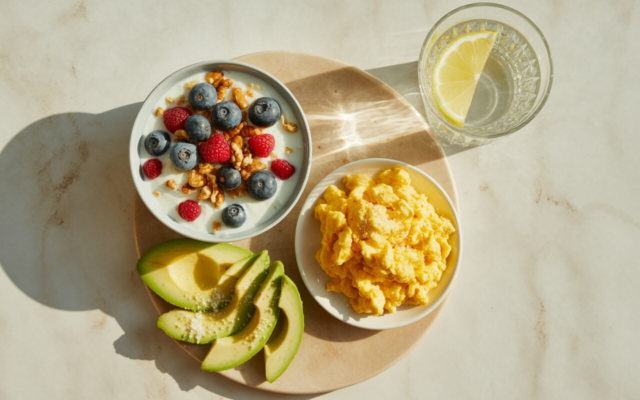
What This Looks Like in Real Life
I know it can be tempting to overthink this, so here are a few easy combos that check all three boxes without requiring a lot of time or effort.
Quick and balanced breakfast ideas:
- 2 scrambled eggs with sautéed spinach, half an avocado, and a side of berries
- Plain Greek yogurt with chia seeds, fresh berries, and a handful of walnuts
- Overnight oats made with protein powder, almond butter, and sliced banana
- A smoothie with a scoop of protein powder, a cup of frozen berries, a tablespoon of flaxseed, and a handful of spinach
- Cottage cheese topped with sliced peaches and a drizzle of almond butter
Notice that none of these require you to be a morning chef. They’re simple, real, and genuinely delicious.
Start With One Change
If your current breakfast is missing one of these three pillars, that’s your starting point. Not an overhaul, just one addition. Adding a protein source to what you already eat, throwing chia seeds into your yogurt, or swapping flavored yogurt for plain with nut butter on top are all small shifts that compound over time.
Nourishing your body well in the morning isn’t about restriction or following a rigid plan. It’s about giving yourself the foundation to feel good, think clearly, and show up as your best self throughout the day. And honestly? That starts with breakfast.
Try the formula tomorrow morning and see how you feel by 10am. I think you’ll notice a difference faster than you expect.
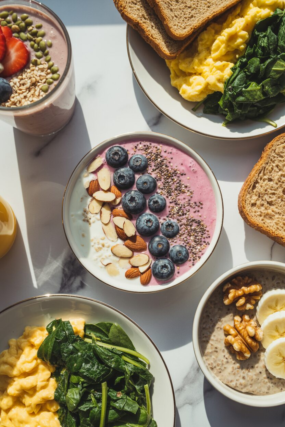
Frequently Asked Questions About the Healthy Breakfast Plate Formula
What is the healthy breakfast plate formula? The healthy breakfast plate formula is a simple approach to building a balanced morning meal using three key nutrients: protein, fiber, and healthy fat. When you combine all three on your plate, you stabilize blood sugar, reduce cravings, and stay full and energized for hours instead of crashing before lunch.
Why is a balanced breakfast important for energy levels? A balanced breakfast that includes protein, fiber, and fat works together to slow digestion and prevent blood sugar spikes. Without this balance, most breakfast options, even ones that seem healthy, cause a quick energy spike followed by a crash that leaves you tired, hungry, and reaching for snacks way too soon.
How much protein should I eat at breakfast? For a truly balanced morning meal, aim for 20 to 30 grams of protein at breakfast. Great high protein breakfast options include eggs, Greek yogurt, cottage cheese, and protein smoothies. Hitting this target consistently is one of the most impactful things you can do for your hunger, energy, and metabolism throughout the day.
What are the best high fiber breakfast foods? The best high fiber breakfast foods include raspberries, blackberries, chia seeds, ground flaxseed, oats, avocado, and vegetables like spinach and bell peppers. Pairing fiber with protein and healthy fat creates a breakfast that supports gut health, steady blood sugar, and lasting fullness.
What are healthy fats to eat in the morning? Healthy fats for breakfast include avocado, nut butters, walnuts, hemp seeds, whole eggs, and coconut milk. Including a source of healthy fat in your morning meal supports hormone production, brain function, and satiety, helping you stay fuller longer without constantly snacking.
Can a balanced breakfast help with weight management? Yes. A protein, fiber, and fat-balanced breakfast helps regulate hunger hormones like ghrelin, which controls how quickly you feel hungry again after eating. When your breakfast keeps you satisfied through the morning, you naturally eat less throughout the day and make more intentional food choices overall.
What are some quick, balanced breakfast ideas? Some easy, balanced breakfast ideas that follow the healthy breakfast plate formula include Greek yogurt with berries and walnuts, scrambled eggs with avocado and sautéed spinach, overnight oats with protein powder and almond butter, and cottage cheese topped with fruit and a drizzle of nut butter. Each one hits protein, fiber, and fat without requiring much time or effort.
Is the breakfast plate formula good for gut health? Absolutely. The fiber component of the breakfast plate formula directly supports gut health by feeding the beneficial bacteria in your microbiome. Foods like chia seeds, oats, berries, and vegetables are particularly good for digestion, and pairing them with protein and healthy fat creates a morning meal that supports your gut and your energy at the same time.