Skip to content
The Make-Ahead Breakfast That Packs ~30 Grams of Fiber
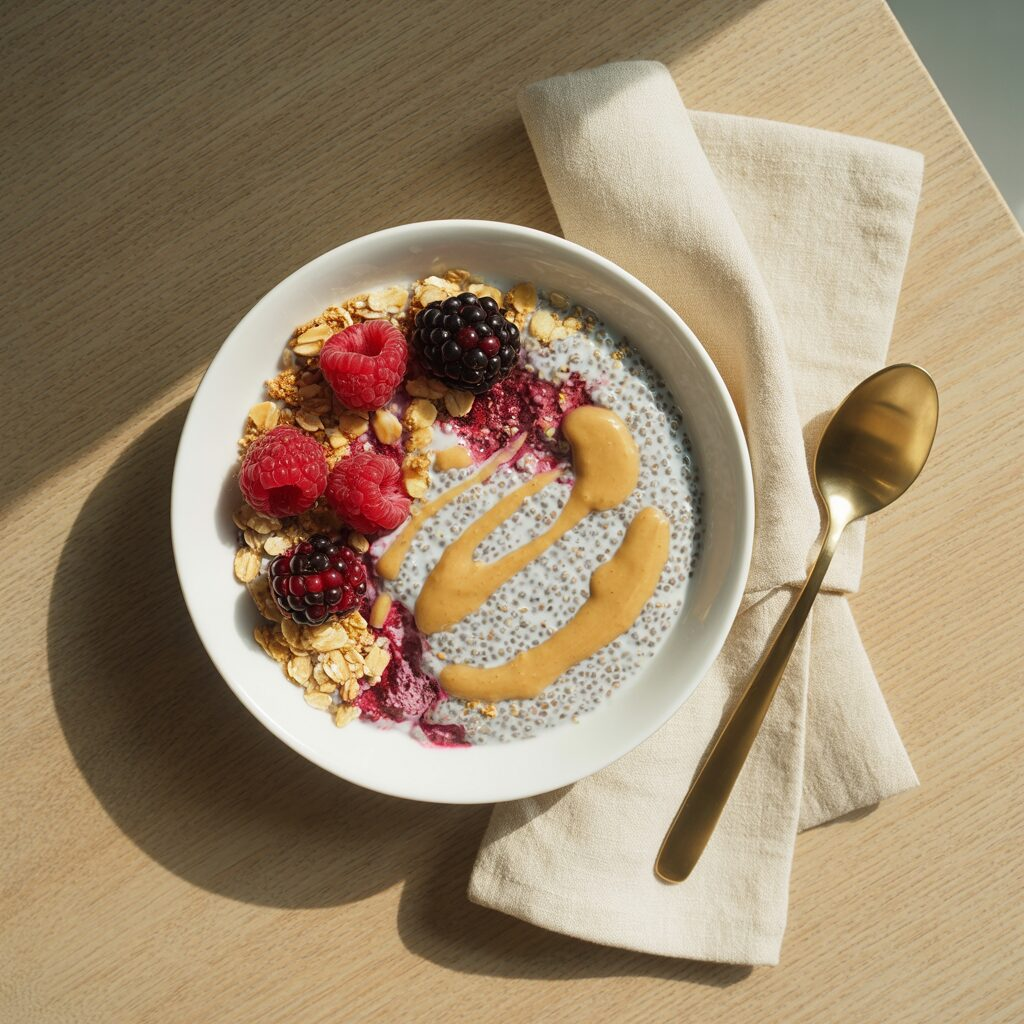
Mornings are hectic! It’s 7 a.m. You hit snooze twice, you’re already running five minutes behind, and the last thing you have time to do is cook a big breakfast. But you want something healthy, high protein and high fiber! Enter, Chia Pudding Power Bowl!
You made it last night. You did absolutely nothing this morning except open the fridge, layer on a few toppings, and walk out the door feeling like your life is really together. And it’s a nutritional powerhouse. With around 28 to 32 grams of fiber per serving, this bowl delivers more than most people get in an entire day, all wrapped up in something that looks beautiful, tastes delicious, and keeps you full until lunch without a second thought.
Let’s break down what makes this bowl so powerful, and why you should absolutely be making it on repeat.
What’s In the Bowl
Here’s the full recipe before we dive into the nutrition:
Ingredients:
- 4 tablespoons of
chia seeds - 1 cup unsweetened almond milk or oat milk
- 1/2 cup raspberries or blackberries (or your fav berries, they can be frozen too!)
- 1 tablespoon ground flaxseed
- 1/4 cup oat-based granola
- Small drizzle of almond butter
- + Optional Additions if you want!
Directions:
The night before, stir your

The Nutritional Breakdown: Why This Bowl Is a Big Deal
Chia Seeds: Small but Mighty
Four tablespoons of
Chia seeds are loaded with omega-3 fatty acids, specifically ALA (alpha-linolenic acid), which is the plant-based form of those heart-healthy fats we always hear about. They also bring a solid hit of plant-based protein (about 8 grams per 4 tablespoons), calcium, magnesium, phosphorus, and antioxidants.
Because
Ground Flaxseed: A Little Goes a Long Way
That single tablespoon of ground flaxseed adds around 2 to 3 grams of fiber, plus another dose of
One important note: ground flaxseed is key here. Whole flaxseeds often pass through the digestive system intact, which means your body doesn’t absorb all those wonderful nutrients. Ground is always the better choice for maximum benefit.

Berries: Nature’s Fiber Superstars
Berries are one of the most underrated high-fiber foods out there. Half a cup of raspberries contains about 4 grams of fiber, and blackberries come in close at around 3.8 grams. They’re also packed with vitamin C, folate, and polyphenols, which are plant compounds that act as antioxidants in the body and have been linked to reduced inflammation and improved gut microbiome diversity.
The deep blue and red pigments in these berries, called anthocyanins, are especially well-studied for their role in supporting brain health, cardiovascular function, and lowering oxidative stress. Basically, they’re doing a whole lot of good work in that half cup.
Oat-Based Granola: Crunch with Purpose
A quarter cup of oat-based granola adds roughly 2 to 4 grams of fiber (this is where the range of 28 to 32 grams comes in, depending on your granola brand) along with beta-glucan, a type of soluble fiber found in oats that has been specifically studied for its ability to lower LDL cholesterol and support healthy blood sugar regulation.
When choosing a granola, look for one that’s made with whole rolled oats and has minimal added sugar. Many store-bought granolas sneak in more sweetener than you’d expect, so a quick glance at the ingredient list goes a long way.
Almond Butter: The Finishing Touch
That small drizzle of almond butter does more than make the bowl look irresistible. It adds healthy monounsaturated fats that help your body absorb fat-soluble vitamins from the berries and other ingredients. It also contributes a bit more protein and a small additional amount of fiber, rounding out the macronutrient profile beautifully.
Fats also slow gastric emptying, which means you’ll stay fuller even longer and avoid that mid-morning energy crash that sends you searching for snacks by 10 a.m.
Why 30 Grams of Fiber Matters
Most adults in the U.S. consume somewhere between 10 and 15 grams of fiber per day, which is well below the recommended 25 to 38 grams. Chronic under-consumption of fiber is linked to poor gut health, sluggish digestion, elevated cholesterol, blood sugar instability, and even increased risk of colorectal cancer.
Fiber is also essential for feeding your gut microbiome. The beneficial bacteria in your gut ferment fiber and produce short-chain fatty acids, compounds that reduce inflammation, support immune function, and even influence mood and cognition through the gut-brain axis.
Getting 30 grams of fiber in a single breakfast sounds extreme, but this bowl proves it doesn’t have to feel like a chore. It tastes genuinely good. It takes almost no time to prepare. And your gut will absolutely thank you for it.

Tips to Make This Bowl Your Own (There are so many options!)
- Use full-fat coconut milk for a creamier, richer texture with a subtle sweetness.
- Add a tablespoon of hemp seeds for a boost of plant protein and extra minerals.
- Sliced strawberries, blueberries, or even diced mango work beautifully depending on the season.
- If cold pudding isn’t your thing in the winter months, gently warm the
chia pudding on the stovetop before adding your toppings. - Make three or four jars on Sunday night and you’ve got breakfast handled through Wednesday with zero morning effort. I love these jars.

The Bottom Line
The Chia Pudding Power Bowl is one of those rare breakfasts that genuinely does it all. It’s fast, it’s beautiful, it’s satisfying, and the nutritional profile is hard to beat. Thirty grams of fiber, omega-3 fatty acids, antioxidants, plant-based protein, and blood sugar-stabilizing fats, all before 8 a.m.
Whether you’re focused on improving gut health, managing inflammation, or simply trying to eat in a way that keeps you energized and focused throughout the day, this bowl belongs in your regular rotation.
Make it tonight. Thank yourself tomorrow morning.
Ingredients
Method
- Whisk everything together in a large bowl.
- Let sit 5–10 minutes, then whisk again to prevent clumping.
- Add into Individual Jars if desired
- Cover and refrigerate at least 4 hours, ideally overnight.
- Stir before serving. If it’s too thick, add a splash of milk.
Frequently Asked Questions
How long does
Can I use a different milk? Absolutely! Any milk works here. Unsweetened almond and oat milk are great neutral options, but full-fat coconut milk gives you a richer, creamier texture. Regular dairy milk works too if that’s your preference.
My
Can I use frozen berries? Yes! Frozen berries work beautifully. Just let them thaw in the fridge overnight alongside your pudding and they’ll be perfectly soft and jammy by morning. They actually release a little juice that pools into the pudding in the best way.
Is this recipe gluten free?
Can I add protein powder to this? You can! A scoop of your favorite unflavored or vanilla protein powder blends in really well when you mix the